
For as long as I can remember, food has played a huge part in my life. Growing up in Taiwan, a place with a huge street food culture, my mom rarely did any home cooking. Just before she leaves work to head home, she would call me and ask, “What do you want to eat today?” and grab the items of my appetite on her way home. My dad could only boil water and his reason for being in the kitchen was to look for snacks, never for cooking. From an early age, I learned, spoonful by spoonful, that choice was something I could make every day, meal by meal. That diversity was literally around the corner, one food hawker away. This, together with my recurring childhood dream, characterizes my facilitation style.
For me: everyone has their unique style of facilitation, just like everyone can cook, depending on what is in your kitchen cupboard, or what knowledge was passed down to you or you have acquired by yourself. Cooking is not about being a chef and following rules, but about creating to satisfy your craving and do it from the heart. Inspired by ‘Sitting in The Fire’ by Arnold Mindell and combined with the concept of ‘burning one’s wood’, comes the title for this final project. ‘Cook as you are – burn your wood and enjoy food too!’
My love for food has grown beyond just satisfying my hunger. It has become a way for me to connect with people and cultures. Every dish tells a story, and every culture or family origin has its unique flavor. That’s why I have chosen meaningful recipes, related to a particular taste. This chosen form or structure is meant as a backbone for this final project. In which I use the chosen flavor and recipe as a metaphor to express my facilitation style, reflections seen through a Processwork lens and sharing of the gain insights. What flavor is most celebrated in the dish? And how does that taste relate to the lessons of life?
In Mandarin Chinese, “Suān 酸 tián 甜 kǔ 苦 là 辣” means sour-sweet-bitter-spicy. It is a term used to describe the ups and downs, joys and sorrows of life. Traditionally, when a couple is about to enter the rituals of a wedding ceremony, one of the wedding games is to have the couple taste food items in those four different flavors that symbolize the emotions they will experience during their life together as a couple. This way of engaging flavors as an embodied metaphor for life is something I believe can be extended beyond the institution of marriage. So I have borrowed the form of this game and apply it in my thesis.
In this final project, each chapter represents one of the flavors. In these chapters, I share a story, my reflections and a recipe tied to that taste that evokes a memory or a reflection of me being a Process Oriented facilitator. How on this journey of being a Processworker, I have learned to appreciate and work with all these flavors, in life and when being with groups, people or beings. Just like when one steps into the kitchen and gets to cook, to prepare food to enjoy.
Chapters
Intro: floating into writing
For someone who thinks in pictures, I feel terrified to write.
Different thoughts swirl around in my head.
- You don’t know how to explain things clearly!
- You use too many words
- You are not able to make no logical connections.
- People will never understand what you are trying to say
These thoughts sound like people shouting. People are pushing me out of my chair. So I start to look for any kind of distraction: a cup of tea, a different task to perform. Whatever helps me to get away from the writing.
But then, I remember….
- How…..when reading a text that uses exact the right words to describe what I have experienced too, feels like the words are caressing my soul
- How rich the stories are, in textures, tastes and layers. The stories others so generously shared with me for the participatory research. How these stories deserve to be savored.
- How I experience joy and sheer bliss when I read and connect with these stories. How my heart melts and expands, chewing on the history and future weaved within the stories.
So I float over the edge, like how in cartoons characters get seduced by a smell, moving by being pulled by something greater than themself. And write anyway…..
Recurring childhood dream
I walk on the street.
Chatting with someone next to me. Somewhere during the conversation, I feel the urge to switch perspectives. I take three steps, and with each step, I ascend higher till I eventually ‘float’. The person with whom I was chatting looks up in disbelief and asks why I am up there. I shrug my shoulder and show how it’s done, this switching of perspectives.
‘It’s easy!’ I acclaim, only to find out that not everyone can do what I do.

Doraemon was my favorite cartoon from childhood. A robot cat from the future that time traveled through the table drawer. Doraemon has a magic pouch. From there the robot cat pulls out all kinds of gadgets from the future to ‘fix’ the problem at hand. The ‘Take-copter (タケコプター), or Bamboo-Copter (take is Japanese for bamboo) is my favorite.
This adoration translated into my recurring childhood dream, and later in my facilitation style too. The desire to switch perspectives and see things from another point of view. But also, the awkward ‘fitting in’ within a group. In a way, I am more like Doraemon, who is part of the group and is also a robot cat from the future, rather than Shizuka (female classmate and secret crush of the main character Nobita) from the block.
SOUR
My role in groups
Where does my alienated position in relation to groups come from? For the longest time, the story I told myself is that I am an outsider who stands utterly alone.
’If you lean on mountains, mountains fall.
If you lean on people, people fall.
So better rely on yourself, that is the best way to lean on’
these words are one of the lessons my parents would often repeat to me.
My relationship with my parents is, simply put, complicated. My parents had an extramarital affair. My mother was my father’s partner in public and in private. That is to say, my father remained legally married but lived with my mother. Once a month on Sundays, he visited his ‘real’ family. I knew these people existed but had never met. My father’s oldest son is 22 years older than I am. And my mother is nine years older than that son. In my homeland, my father, mother and I were an odd combination. I saw the looks from strangers when they saw us: what is that older man doing with that younger woman? Acquaintances who knew there was more to it never asked the burning question: why didn’t my father live with his own family, but with us?
From a young age I understood the status of our family. My mother said to me: ‘Your daddy and I are not married, but you mustn’t tell anyone’. I was probably five or six years old. I nodded gravely. While growing up I asked my mother time and time again, but in vain: ‘You two fight every day. Why don’t you leave daddy? You aren’t married, after all’.
Our family lived in isolation. The family on my father’s side never visited. My mother was the black sheep of her family. My maternal grandfather was so angry and disappointed that mama had chosen my father that he broke contact with her. His wife, my grandmother, continued to stay connected with mama, but in secret. Finally, at age six, I became acquainted with my mother’s side of the family. My grandpa would tolerate my mother in his home, on the condition that my father was never mentioned. I was told that I must never bring up my father while visiting my grandparents. Through lived experience, without knowing what it was, I learned what it meant to have low rank. What it means to be at the margins in one context, and gain status and power in another.
This forced order of ‘how things should be’ is the consensus reality of my family and from this consensus reality level my primary identity is formed and shaped. What I understood as a child to be the reality of this community in the given time and culture. I learned to act according to the agreed-upon verbal and nonverbal communication.
SOUR in life
I have learned to appreciate the consensus reality with its rank, power dynamic and agreed measurable components as a sour taste. Like biting into a ripe and juicy lime. How the acidity in the lime juice makes your month cringe and your face scrunch. Demonstrated here by my kiddo when she was tasting her first mandarin fruit.
Sour according to the traditional Chinese medicine astringes. It tightens things up and stops the leakage of both fluids and energy. I recognize and appreciate this taste when working with groups in the role of a facilitator. Bringing in the sour taste and hence working with the awareness of consensus reality can bring momentary relief in the sense of clarity. The slight tigenting binds, constricts and compresses the group. Depending on the power dynamic in the group, sometimes new flow of information appears, like a flood of saliva after one eats something sour. I believe this is similar to the hotspots in group processes, where moments of tension can create opportunities for growth and development. With every bite of something sour, saliva begins to flow, just like information that is asking to unfold. The sourness as the edge or the threshold between the primary and the secondary processes and identities. The place of possibilities, if one is willing to engage and discover unknown or mystic grounds.
💭 A story from the memory archive
Summer 2020, June, As the murder of George Floyd went viral while the whole world was in lockdown, #blm demonstrations arose. I felt torn. The social activist in me wanted to be on the streets, do my part, let my voice be heard, and join the movement. The scared part of me hesitated, what about social distancing? What about the safety of the ones around me? I frantically checked with my friends, going through my Whatsapp to check if anyone is going to a demonstration, and what are their thoughts when it comes to social distancing and being in a crowd for a good cause.
Somehow, none of my friends in the Netherlands shared my frantic and restless unease. They felt that #blm was something far from their world, not something they would participate in. One friend did go to the demonstration in Rotterdam with her family. I had no idea what my place should be, what is mine to do now?
Then it hit me, I am a facilitator so the least I can do is to facilitate. And I can do that virtually while maintaining social distancing. Knowing that, if something is bothering me, there must be others like me. What if I could organize an online dialogue with others like me? I shared this idea with all of my Whatsapp contacts, and one brave soul answered. Agnes immediately took care of the marketing and used her network to invite participants. Off we went. A series of four dialogues online, every Wednesday evening in June, open invitation.
I was nervous before every session. Second-guessing myself and wondering if I have chosen the right method to meet what it seems an immense task. Then I remembered what Ellen Schupbach, my main coach once said to me ‘The facilitator is not there to solve anything, the task of a facilitator is to raise awareness’. So each session started with a clear structure, using the Lewis Method as a tool and container to process the swirling and raging thoughts, emotions and sensations that many were experiencing then.
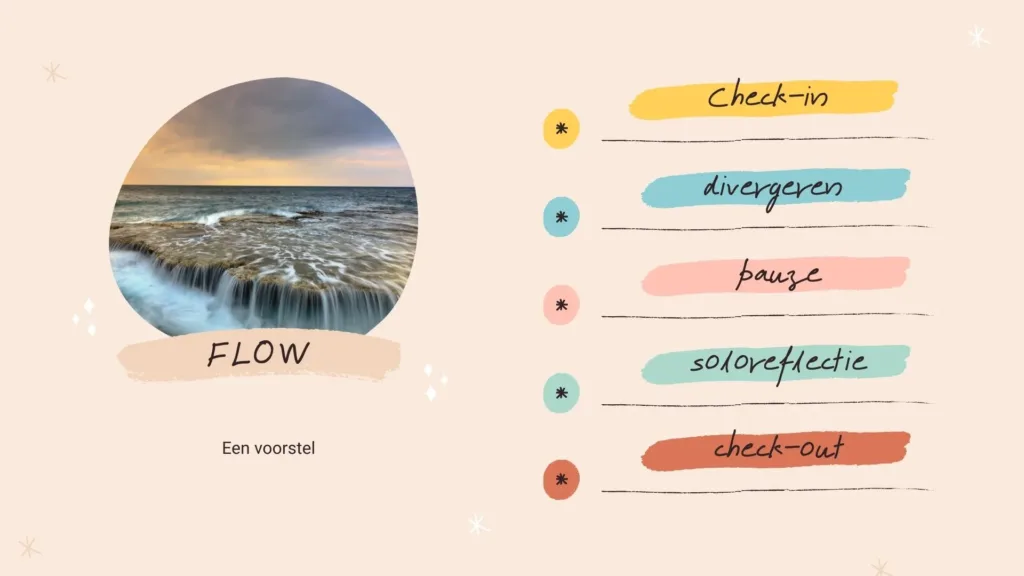
Like every dish, there should be a balance of flavors to bring the taste to life that one wants to highlight. So even though my intention is to use the agreed-upon linear way of working in the global north (structured with clear agenda points, as shown in the slide below) as a construct, a vehicle for us to move through the dialogue, I also added visual elements (colors and pictures) to bring out the dreamlike experiences within me and in the group.
🍋 KEY LIME PIE (recipe adapted from Mangiare, an Italian deli restaurant in Rotterdam)
My kiddo and I started with this recipe during the summer of lockdown.
It has given us many joyful moments.
She would try to make the curd as tart as possible by squeezing out as much liquid out of the lemons and the limes as her force would enable her.
One time, the curd was so tart and sour, we all nearly cried.
Luckily, the whipped cream on top helped, a little.
Also, this dish is dear to my heart, as at my first DDI seminar, I was paired up with Simone Brecht for an inner work exercise. The image and taste of this dessert came to my mind. I remember vividly how the texture and taste of a key lime pie, are symbols of the crucial ingredients for me to enjoy life.
Ingredients
- A roll of Maria biscuits
- Two cans of condensed milk
- 150 grams of butter
- 75 grams egg yolk
- Seven limes and 2 lemons
- 25 milliliters whipped cream
Steps
Take the roll with Maria biscuits and grind them finely in the food processor, if you don’t have them, crumble them very small. Then weigh 150 grams of butter and put it in cubes in the bowl with the finely ground biscuits. Mix the butter and the ground biscuits together into a whole for the base. Put this mix in the baking tin and press it well against the bottom. Then put the base in the oven at 180 degrees for about twenty minutes.
While the bottom is in the oven, start with the cake batter. Cut the seven limes in half and squeeze them into a glass. Note: do not immediately throw the limes away, but make lime zest from the peel of two limes. Mix the lime zest, lime juice, egg yolk and condensed milk together until nice and thick. In the meantime, your base is ready and you can spread the mix over it, after which you place the cake tin back in the oven for fifteen minutes at 180 degrees.
Pour 250 milliliters of whipped cream into a bowl, add a dash of limoncello and mix until stiff. When the rest of the cake has cooled down well, the whipped cream mix can be spread over the cake and you can possibly sprinkle some lime zest over it. Remove the cake from the baking tin, cut out a nice piece for yourself and enjoy your homemade key lime pie!
SWEET
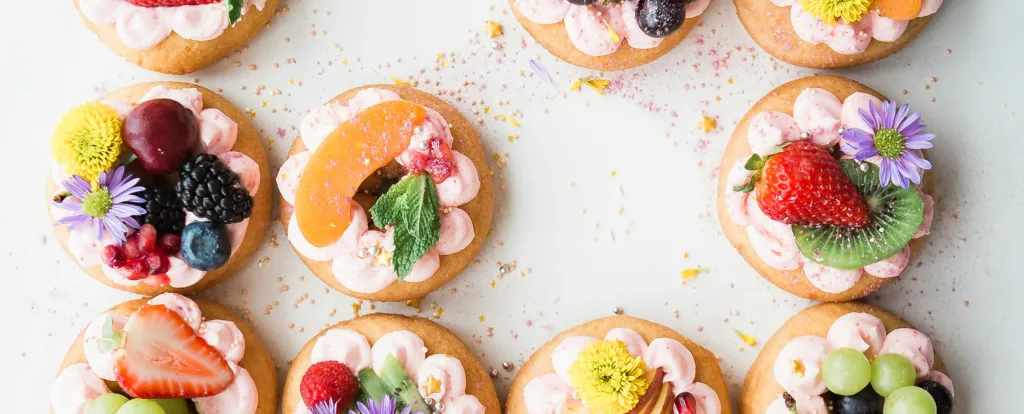
There’s no problem too large that sugar can’t solve
When I first started out as a facilitator as a vocation, my main focus was to keep the energy of the room high. In the belief that that is the only way participants would contribute. Back then, as a community organizer and later as a policy advisor for participatory processes within the context of Dutch governmental bodies, resistance was the thing in the room that needs to be managed, massaged away to make room for something else. So I learned tricks and methods to deal with that resistance by distracting people. Like the line in the song ‘A spoonful of sugar helps the medicine go down’.
People knew me as cheerful and upbeat. Designing energizing and refreshing sessions was my forte. As a facilitator, I was skilled at planning and timeboxing. My sessions hardly ever went overtime and I had a good sense of which methods would work best with which sections and groups. I used a variety of methods, including the Disney Method, Superhero exercise, and energizers. Looking back, I realize that as a facilitator, I was stuck in phase one of the conflict circle – the phase of enjoying life and relaxing. Not aware and not want any troubles in life. By using all kinds of surprising and ‘innovative’ methods, I was essentially feeding participants sugar to sugarcoat the bitter truth. My facilitation style was like an animator assembling a party platter made up of upbeat exercises to give participants a ‘sugar high’, only to experience a ‘sugar crash’ after the session – like how one feels sick after consuming too much candy. After attending a meeting in which I was a participant, I would often experience migraines to the point that I had to suppress the urge to throw up while commuting back home. I thought that the only way to lead effective meetings was to add sugar sugar sugar by having lots of exercises and techniques to keep the spirit high. Without that, I was in a state of low dream. Depressed and (sugar) crushed.

’Sweet dreams are made of this’
There are things other than candy that taste sweet. Unaware as I was, there have been other sweet elements in my life along the way, without me realising so to be able to ‘taste’ it fully. Those sweet elements are like the dream body – the part of me that is trying to grow and develop. As I was not aware of the different channels the signals could come through, I could not unfold the information and instead set these experiences, sensations, and fantasies aside as they do not align with the collective norms or consensus reality I was in.
In the earlier days, long before I started out as a facilitator, I would use metaphors to relate to what is being said. This tendency was considered unusual in my work environment. In one of the internal training I did on project management, when the six-month journey was closed with an appreciation round. Two of the participants wrote the following to me:
What I want to say to you Sara is that your analogies are not always logical at that moment but somehow they are right in the end.
Sara, I appreciate the way how you sometimes emphasize a topic in a totally different manner. You have a broad view of the world, you are spontaneous and a pleasure to work with.
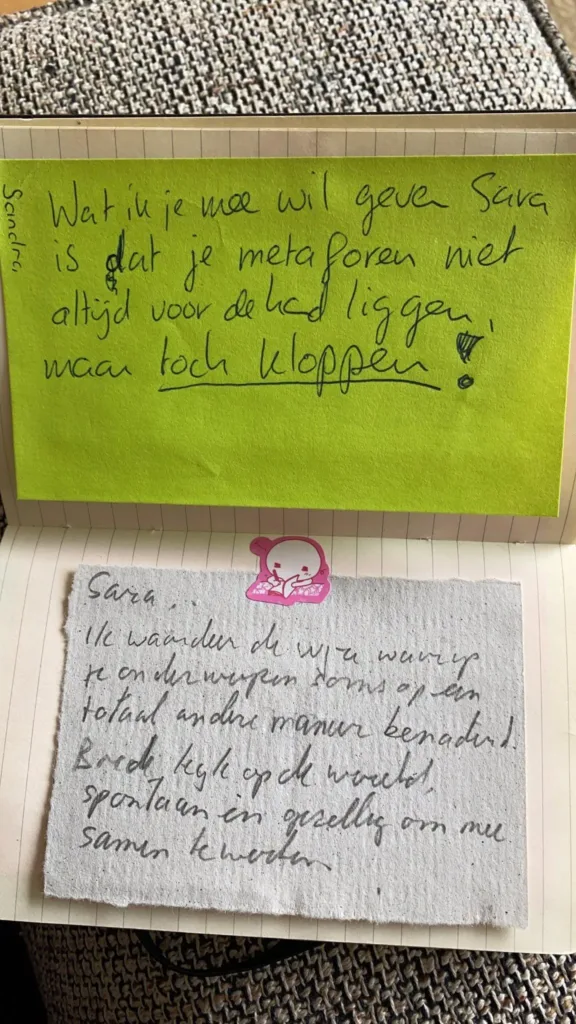
These words of encouragement led me to believe that what I had to offer was so unique that nobody seemed to understand what I was trying to communicate. I believed I had to stay odd to get noticed and be effective. Throughout my career, I was conditioned to believe that only content and knowledge counted. That’s how I justified hiding my feelings. For the longest time, I felt there was something wrong with me, that I read too much into things, or that I was too sensitive.
My primary substyle, the most predictable way of working with others on the consensus reality level, was one of an awkward, clownish performer. Red-eyed from nervousness and feeling inadequate and not good enough. A big head with thin arms and legs, I was wobbly rather than grounded.
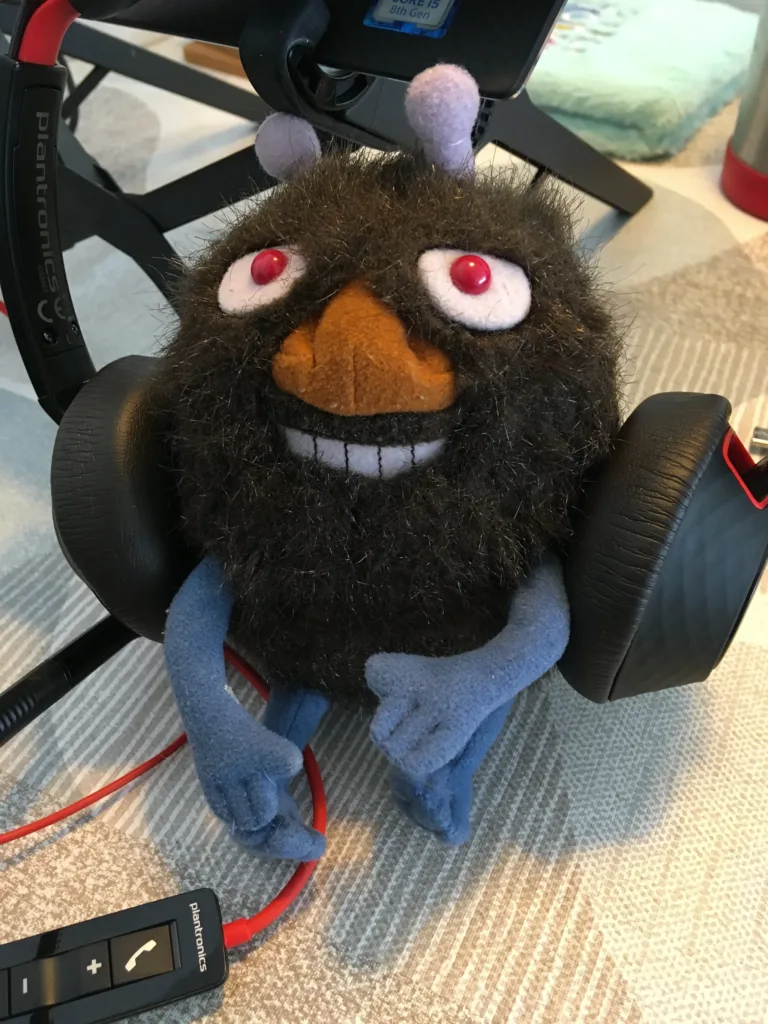
During an online inner work exercise led by Amy Mindell on discovering one’s unique facilitator style, I had a fantastic experience. My primary substyle was represented by ‘Effelien’, a stuffed toy (pictured above👆🏾), who can be uplifting and surprising at the first sight. ‘Effelien’ sometimes acts silly and loud too, jumping up and down. As she thought that is just the way she needs to be in order to get noticed. My secondary substyle manifested as a stretchy baby wrap, in which Effelien could stop performing and relax, sinking deeper into just being. The stretchy baby wrap represents the side that is non-judgemental and sees the uniqueness in everyone, letting people feel that they are held and good enough just the way they are. When we were invited to revisit the experience of the thing we were repeatedly drawn to in our lives, I travelled on the speed of my memory to the little small talks I had with kids, my love for streetfood and travels, coming up with new suggestions no-one had think of yet and having the space and time to explore on my own. From these memories, the character ‘Joe Black’ came up. In this movie, death itself is shown in a human body with a boyish charm and unfazed by the odd manners of the upper class. Joe loves food as it gives him an instant sensation of being alive.
What I remember vividly about that movie was the scene where Joe Black went to the hospital and got recognized as ‘bad spirit’. The woman was frightened at first but later got comforted by Joe in her native language. When Joe put his hands on the woman, the woman seemed to get a glimpse of the ‘next place’ and smiled with bliss.
This innerwork exercise brought awareness to me to work with all my different substyles. To switch between my primary (Effelien), secondary (baby wrap) and deep (Joe Black) substyle when I facilitate groups. To not just be one or another, but to create a dance in which all the different substyles can support each other.
🔉 Sound on while playing the video below.
This is the dance I envision myself while facilitating, dancing so different substyles can flow.
From: https://www.instagram.com/alexdwong
💭 A story from the memory archive: adding natural sweetness
January 2020, I did not know that a pandemic is about to paralyze the world in less than two months’ time. As a participant, I was attending a Worldwork seminar organized by CFOR and Processwork UK in London. Immersed in intensive days with long group conversations on the challenges of leading and living in demanding times.
Day five ….
Four more days to go.
So much richness in insights and learnings in the days prior, but also much emotional pain.
We have discussed, explored, and further deepened our understanding and feelings about topics such as trauma, oppression, and exploitation. Many flaps hung on the walls, with other subjects still needing attention. These topics reside in different heads. The air is thick with busy minds and heavy hearts.
On the morning of day five. The doors to the garden are open, while the sunlight is streaming in. Five more minutes, and it will be 10am. The usual starting time. I enter the room and find it almost empty. Quietly and unobtrusively, I put the vase with lilies in the middle of the room, on the floor.
While the participants trickle in, I hear them softly admiring the flowers (ooohhhh, flowers!). Their features soften at the sight of the lilies. I smile from inside.
In the meantime, I chat with a fellow participant. She asks ‘Those flowers, how nice, do you know who brought them?’ ‘Me!’ I look at her with a naughty grin. “After so much misery and sadness, I thought, let me bring a different dynamic.” She replies with a gentle smile mixed with surprise: “That’s the sweetest way to disrupt a system.”
My eyes lit up.
“To a day full of tenderness and softness, let’s wait and see!’
🍫 Chocolate mousse (adapted from Oh She Glows blog)
I first tried this recipe when our small family was doing Workaway in Glenboro, Canada. We stayed with a family with 2 kids of their own, one foster child, an au-pair, 2 dogs, 250 chickens and 4 pigs. We shared one bathroom with all 9 of us. It was a fun and humbling experience. I made this chocolate cake for the mom of the household. Later, I adapt the recipe to chocolate mousse only. I often make it when house-sitting for others. So the owners can come home and find this surprise thank-you gift in their fridge.
Ingredients
- Approximately 2 large (500g) cooked orange sweet potato
- 3/4 cup (70g) raw cacao powder
- 3/4 cup (190g) coconut milk or
- 1/3 cup almond milk (or other non-dairy milk)
- 2/3 cup pure maple syrup
- 1/2 tsp vanilla powder
- 1/4 tsp pink Himalayan salt
- 4 Tbsp (65g) raw cacao butter, gently melted or 1 tbsp smooth peanut butter (or other nut or sunflower seed butter)
- 2 tbsp chocolate chips
Steps
Preheat the oven to 200ºC. Wash the sweet potato to remove any surface dirt, prick a few times with a fork and place on a lined oven tray in the centre of the oven. Roast for approximately 30-45 minutes (depending on size). When you can easily slide a knife into the centre they’re done. Remove the sweet potatoes from the oven and allow to cool. The skins will steam themselves off, so when cool enough to handle you should be able to easily peel the skins off with your hands.
While the sweet potato are cooling, melt the cacao butter by placing it in a heat proof bowl set over a pan of steaming water with the heat turned off.
Measure out 500g of sweet potato and place into a food processor or high speed blender (note: a blender works best as it gives you the smoothest texture). Add the cacao powder, coconut milk, vanilla powder and salt and blend until smooth.
Pour in the melted cacao butter with the motor running and blend for about 30 seconds until you have a smooth chocolate mousse.
Scoop the chocolate mousse into serving dishes and place in the fridge to chill until required. Scatter the unmelted chocolate chips or some fresh berries when serving.
BITTER
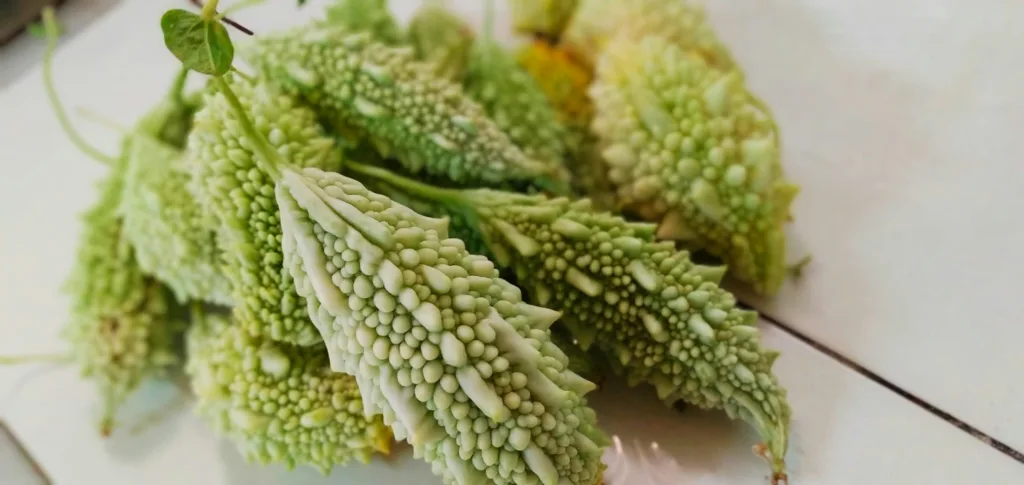
There is one vegetable my mom loved and I hated as a child, that is ‘bitter gourd’. She would put slices of it in a clear soup broth with pork chops. Stuff and steam it with minced meat. Or have it cooled and mixed with creamy mayonnaise as a side dish. With each bite, she sums up the health benefits of this wonder vegetable, how it cools the body (its ability to lower inflammation) and combats several diseases. I could not understand how she would appreciate such a bitter taste.
This chapter is all about bitterness, and how it can sometimes be beneficial, just like the bitter gourd. If only one is willing to surrender to the taste.
Bitterness reminds me of the visits to a traditional Chinese pharmacy, where the chosen dried plant roots were ground up in fine powder and then wrapped in paper.
Once reached home, I would pour myself a cup of tepid water. Open the paper package and find a way to swallow the bitter powder without gagging. For me, this reflex of not wanting to swallow the bitter medicine is a form of an edge behavior. As bitterness can be tough to swallow, and it can also be a great source of learning and growth. Knowing that the bitter medicine will support me in the process of healing does not mean that I will swallow the medicine without some form of resistance.
Along the journey of becoming and being a Processworker, I have learned that a facilitator’s job is not to drag or push the group over it’s edge, but to work together at the edge. There, my awareness helps me to navigate and track the signals for me to follow the process. The bitter flavour reminds me to work with the unique characteristics of the edge. The edge is like a ‘no person’s land’ where the primary and the secondary processes are about to meet, where the known world and the unknown experiences are colliding. In my work, I turn to innerwork exercises when participants are at the edge. By introducing an Innerwork exercise, participants are invited to board a vehicle so they can travel through dreamland, finding unknown and known parts of themselves and tapping into the sentient part of themselves. Not just get caught in the polarisation between the primary and the secondary processes. So they can appreciate the beneficial elements that come with the bitterness, like how my mom could truly enjoy the flavor of the bitter gourd.
The taste of bitterness supports us to appreciate the sweetness of life. However, although the benefits of bitterness are invaluable, human beings do not tend to enjoy bitterness in general. The preference is for something sweet at first. Like how newborns take big gulps of formula/sweet break milk.
One of my first experiences with an inner-work exercise was a felt sense of the healing power of bitterness. As a newbie to Processwork, I was lucky to be paired up with a partner who had attended several DDI seminars already. I shared my life story of being left as the only child of my parents and with no family support on my own in a foreign country at the age of 17. How it felt like. Me as a small child, sitting in a lonely corner.

My buddy invited me to switch channels by seeking out a corner in the lobby where we were sitting, to embody the posture I had in mind. We found an improvised corner between a coat rack and some kind of glass wall on wheels, with people busy talking and doing the inner-work exercise. I sat on the ground and hugged my knees. It was a revelation.
While sitting, I felt the glass wall behind me, which gave me support. The hanging coats on the rack acted as curtains for sound absorption. The angle of the corner, combined with the position of sitting on the ground, provided a perspective to the room that was unusual. By embodying the posture I had in my mind, I gained a new experience and could now tell a new story. That being a child in the corner was not sad or lonely. Taking that posture of the child in that corner of the lobby, as the grown woman that I am, I felt comfortable because of the support of the glass wall. Cozy because of the coat curtain, and curious while observing others from an unusual perspective.
That inner-work gave me the ability to swallow the bitterness without gagging. Like my mom, I am now enjoying the bitter taste of life while taking in its beneficial elements.
🥢 Using inner-work to unfold hidden parts of myself when facilitating
Once I was invited to facilitate a team session after a split in the team due to racial tensions. For the second session, I requested a co-facilitator and was paired up with someone that I have a working and amicable working relationship with. We agreed on the roles, with me taking the lead and that whatever happens within the session, we will support each other’s interventions, even when we do not fully understand it yet.
We prepared the flow for the session and were expecting the unexpected. Which was also what happened, shortly after the check-in round. My fellow facilitator looked at me and said out loud: ‘You know what, Sara? Time to improvise!’ The two of us called for a bio break and quickly aligned on the spot. I replied to her: ‘Whatever you want to do now, that’s the only thing that needs to happen. I will support you no matter what. Just tell me what you need.
She was brilliant and literally moved the room by asking participants to line up. While she was leading the group, I felt uneasy. My internal process involves a nagging voice, shouting: ‘Look at you now, you are supposed to be the lead and now she is doing all these brilliant moves. You are a joke and am incompetent’. Apart from this auditory channel, there was information coming in from the movement channel. Upon exploration of the movement, the song ‘Follow the Leader’ by Socca Boys came up. The message I got from this inner-work was ‘We are supposed to get it going, so it does not matter who takes the lead, as long as the group is moving and unfolding together’. Like the song itself. it might have simple chords and lyrics, and still, it gets people dancing which is the whole point.
On a world channel, the session itself was about exploring racial tension within teams and organizations. In terms of ranking in the consensus reality level, to have my fellow facilitator who self-identifies as black and female move to the center and take the lead, despite the agreement of roles we made before, was actually what the team needed to experience. Finally, on a relationship channel, my fellow facilitator was the one who referred me to the client in the first place. So if I can support her in this specific session (like the background dancers in the clip of Socca Boys), I am paying it forward for many who have suppprted me on my solo entrepreneurship journey. We are all meant to shine, not compete. Move together, dealing with life, either on stage or as an audience. We all move and dance to the music of life….
🔧 Application of innerwork in a designed session, meant to foster connections
In this 60-minute session, participants are members of a global community of facilitators.
My intention and challenge is to create an atmosphere that will allow connection (to others and to self), contemplation time and deep sharing. Knowing that humans tend to avoid bitterness, I deliberately designed for playfulness upon arrival by inviting the participants to draw & rhyme. To stay steady and avoid getting jitters that is common at the edge, I incorporated elements of movement by slowing down to collect an item that tastes bitter, then treasure hunting for symbols. Before moving to solo reflection (finding the essence) and subgroup sharing.
Some of the feedforward I got from the participants:
🌹I really enjoyed the group coming together & tasting something bitter to rid us of winter toxins.
🌹The snapshot exercise was lovely, a great way to connect visually
🌹 I appreciated the fast pace and connectedness of the experiences that flowed like water, especially for a late morning break. Timing was flawless.
🪷 Perhaps giving us a heads up that we would be doing several scavenger hunts, although I did not mind the spontaneity. It added an element of surprise.
🪷✨ I loved the self-reflection writing, and would like to do this again as although I was present, I could perhaps have used more time.
🍚 Stirred fried Brussels sprouts with bacon
This recipe is a mash-up between my Dutch and Taiwanese side. Brussels sprouts is something that is eaten often in Dutch winter. Boiled with potatoes and made in a big mash. It was a vegatable never found in my shopping cart as I disliked the bitter taste.
When a friend told me that her toddler loves Brussels sprouts I was so surprised! Then she shared this versatile recipe with me. Adapt and tweak to your own taste, The key here, for me, is not to boil the vegetable for too long. Just like doing inner-work, don’t wallow in it for too long, but use it to ‘burn your wood’ and learn from the insights.
Over time, I have learn to appreciate the crunchy bite and bitter yet morish taste of this miniature cabbage.
Ingredients
- Brussel sprouts
- Bacon (organic if possible)
- Some finely chopped garlic and ginger
- Some soy sauce, ketchup, sesame oil, toasted sesame seeds and black pepper
- 3 to 4 tablespoon of water
Steps
- Serve with a bowl of freshly steamed Taiwanese rice! </aside>
- Trim the base of the Brussels sprouts off and any outer leaves that look wilted.
- Cut each Brussels sprouts into halves.
- Fry the bacon on medium heat for about 5 minutes till crispy, set aside
- Add chopped garlic, ginger and the halved Brussels sprouts to the bacon grease and fry on medium-high heat
- Add soy sauce, some ketchup and a bit of water, cover to simmer or until the Brussels sprouts become tender
- Add in the bacon, drizzle over some sesame oil and toasted sesam seeds, add black pepper to taste
SPICY
What happens when you eat something spicy?
Several things.
The compound responsible for the spiciness is called capsaicin, and it triggers the body’s pain receptors. Capsaicin stimulates the nerve endings in the mouth and throat, causing a burning or tingling sensation. This is why one may feel immediate heat or even discomfort when eating spicy food.
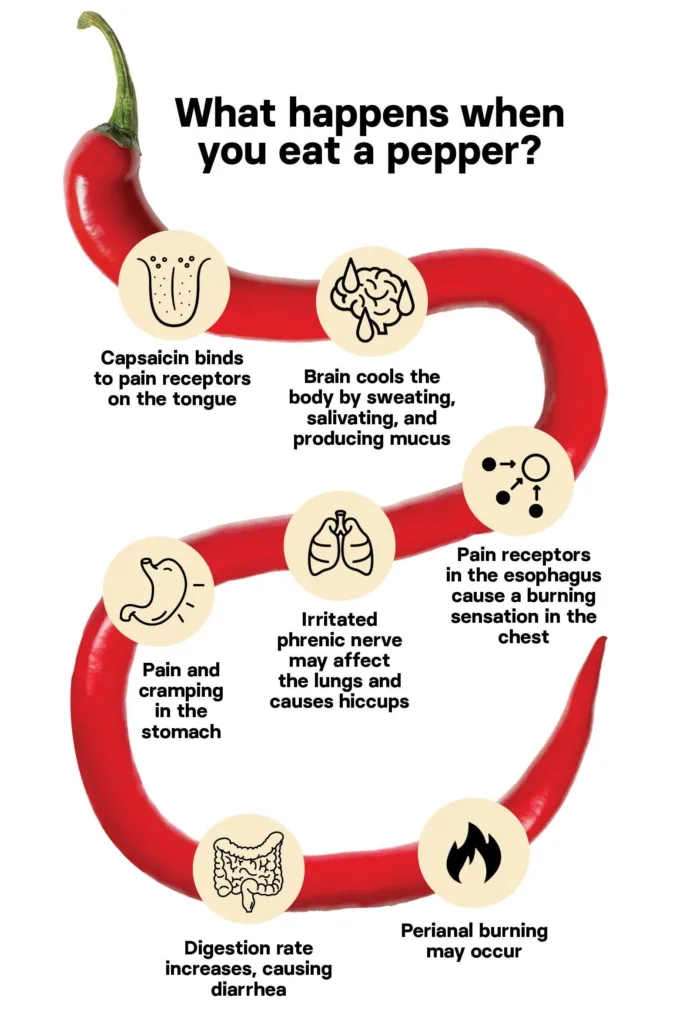
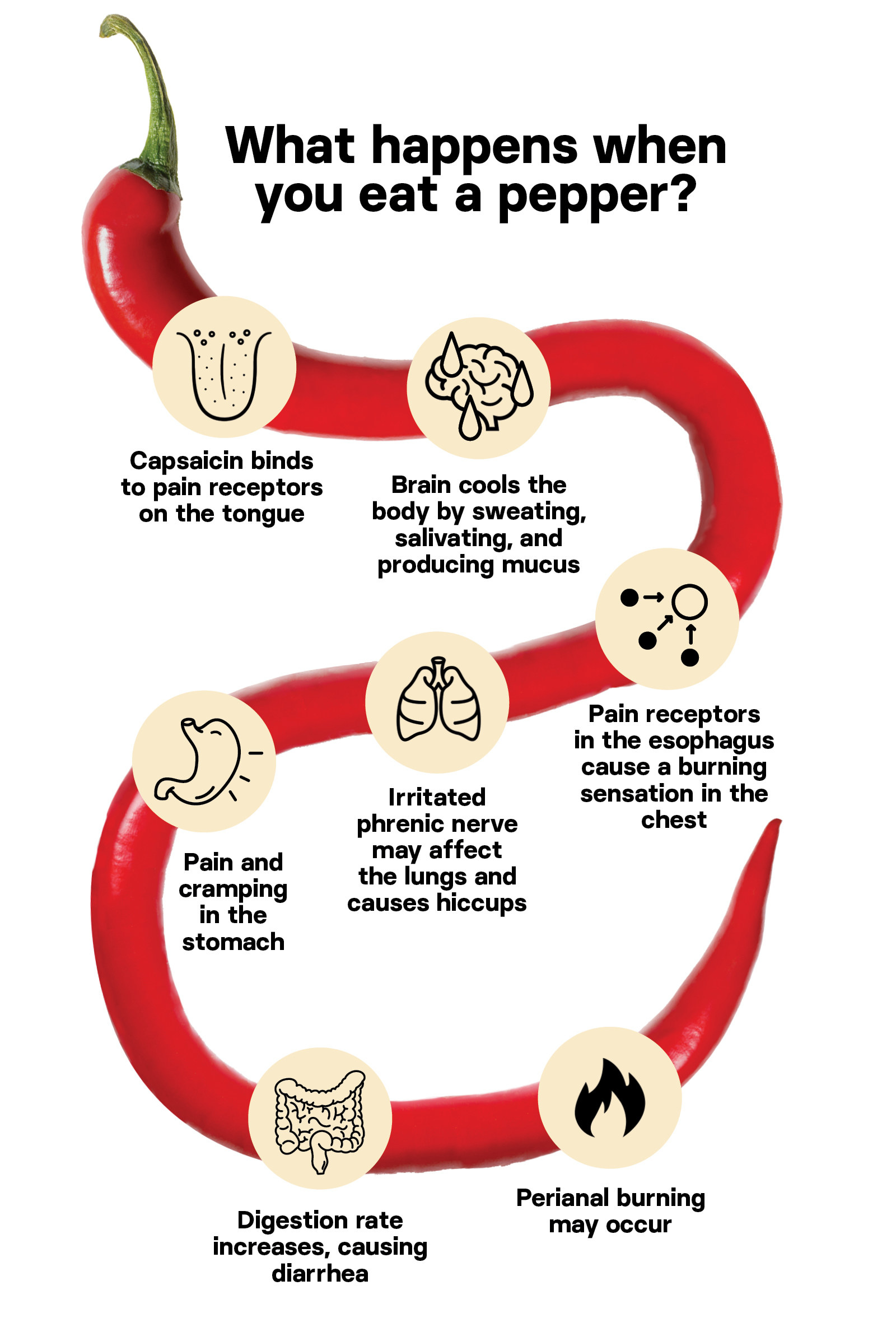
Next, the body reacts to the perceived “threat” of the spicy food by releasing endorphins. Endorphins are natural painkillers that can create a sense of pleasure or euphoria. That’s why some people may experience a “spicy food high” or a rush of positive emotions after eating something spicy. Additionally, eating spicy food also increases the body temperature and can make one sweat. This is a natural response to cool down the body and counteract the heat caused by capsaicin. It’s important to note that the effects of eating something spicy can vary from person to person, depending on their tolerance and sensitivity to capsaicin.
Group process and more specifically Worldwork reminds me of the process of eating something spicy. Everybody in the group reacts differently with the topic or the role being unfolded at the moment. Depending on the intensity of the personal engagement. Just like how one can or can not handle spicy food, depending on preferences and own development of taste buds of the food consumed before.
Worldwork as group process represents a complex social situation. It involves people with differing opinions, engaging in debates, conflicts, and passionate exchanges. In group processes, emotional and intellectual engagement makes the whole experience ‘spicy’. Participants might experience physical sensations such as sweating or heart racing. Like when tasting something spicy. Spiciness and group processes both involve intense sensations and interactions, but in different contexts.
The participants involved in Worldwork reminds me of the Youtube serie ‘Hot Ones’ where celebrities are invited for an interview where they have to taste chicken wings dipped in different hot sauces while answering questions. The host of the show for me, is like the facilitator in group process, as he is also eating while interviewing. Like the facilitator in the group process is also part of the group process. The interviewer in the ‘Hot Ones’ gives some instructions of the intensity of different sauces, like a facilitator would frame hotspots and coolspots and deepening roles when needed. Eventhough everyone has their own tolerance to spice, every guest on the show will eventually hit a certain point where they stutter and almost can not handle the heat. Just like in group process, all participants are digesting the roles together, each in their own way, depending on their history, involvement and capacity.
One of my favourite episodes of ‘The Hot Ones’ is the one with Viola Davis, where about 21 minutes and 30 seconds in, Viola dips the chicken wings in ‘The Last Dab: Apollo’ and starts to sigh and taking sips of milk to dempen the heat. While the interviewer asks: ‘What does the saying by the famous mythologist Joseph Campbell ‘The privilege of a lifetime is being who you are’, mean to you? ‘
Viola replies by taking a big breath with the answer:
“Now we are about to get deep….. (folds and put down her napkin, coughs) while I am choking to death…….
I just feel like our whole journey in life is becoming our ideal selves….
We get stripped away as we get along the journey…..
At the end of the day, you come into this world you are absolutely who you are…. (goes on with examples of social conditioning in the consensus reality)…
Somewhere along the line is a voice deep within you that tells you exactly who you are. You just have to have the courage to do that. That is what the hero’s journey is all about…….
At some point you come face to face with not God, but yourself…
And then somewhere along the line, you get it: your Aha moment, your Elixir.And you go back to your Ordinary World, and you share it with others…….
I think that is the privilege.
Being absolutely who you are, belong to yourself, and being brave.”
As a reaction to the hot sauce, there are visible bodily sensations during Viola’s speech, and still she keeps the words coming. I see it as a symbol of what spices can do. How we are able to perceive reality differently when we consume spices. How we are transported to another dimension in which more is possible. The ‘spicy’ group process gets us to a dimension where we can deepen our understanding of the essence. How we get back to our true and unique selves. This experience is a reminder of our limitless potential and encourages us to explore the depths of our being. It encourages us to take risks and challenge our assumptions about ourselves. When we allow ourselves to be moved by the spices and the group process, it allows us to become our true selves and to live a more fulfilling life.
In contrast to what some prefers to do, stray away from spices, keeping things bland. Or build a thick wall, like Homer Simpson does in this episode. He does not want to be laughed at, and to avoid the heat, he drinks candle wax.
💭 From the memory archive: getting spicy online
March 2022, only a few months after the invasion of Russia of Ukraine. Bill Say (member of my guiding team) was organizing a public forum together with Lane Ayre. A week before the event, Bill reached out and inquired if I could step in as a chat facilitator. I gladly accepted the invitation. Together we agreed that my assistance during the virtual public forum will be:
- speak out (unmute) if I notice input in the chat which needs to be brought in and to be digested in the group process (switching channels so to speak)
- quick recap of coolspots, to rasie awareness and help people process information
- naming things that are being said, so people can follow
- explain jargons in the chat if question raised
There were somewhere about 150+ participants for this forum. I can’t remember the specific details or how the process went, I just remember the chat kind of blowing up. Different comments, some in characters I could not read. Frantically, I copy-paste the unknown characters in Google Translate, then copy-paste the answers in English back.
Looking back, it feels like I was going through bottles of hot sauces while assisting in the chat, my heart racing as the chat got more and more complex. Sometimes the comments were made to the process in the plenary, sometimes the comments lead a life of its own. At a certain moment, I became somewhat like Homer Simpson who drank candle wax. I made a mental wall so I could focus more on the technical aspect of the task to stay ‘alive’ as the chat facilitator. Blocking out some of the emotions I was going through when I read the translated comment in the chat.
Afterwards, re-reading the chat made me wonder and sometimes even second-guess my interventions. However, knowing that as a facilitation team, we all did the best we could with the awareness we had at that moment. Following the signals and unfolding it where the process allowed it to.
🌶️ Laotian spicy paste ‘Jeow Bong’
*On our honeymoon trip to Laos in 2008, my husband and I attended a cooking class where we learned to make this spicy, semi-sweet, and savory paste. We just could not stop eating this stuff. Unfortunately, I can not find the original recipe in which we were instructed to stirfry the pounded chilli paste, so I found a different version online which I am sharing below.
The complex layers of this paste make one craving for more. Not unlike my appetite for attending Worldwork and learning Intensives. Even though you know you will burn from the inside from the experience, you take a bite anyway and go back for more.*
Ingredients:
- 2 tablespoons of palm sugar
- 2 tablespoons of tamarind juice
- 2 tablespoons of fish sauce
- ½ tablespoon of salt
- 1 cup of Thai dried chili peppers, long version
- 1 cup of Thai dried chili peppers, short version
- 1 cup of shallots, peeled
- 1 cup of garlic, peeled
- ½ cup of galangal, sliced
Steps
- Roast the shallots, garlic, and galangal until darkened and cooked through.
- On a heated skillet on the stove, roast the long and short Thai dried chili peppers until it’s aromatic. Remove from heat.
- Add the roasted chiles into the mortar and pestle and pound, grind.
- Next, add in shallots, garlic, and galangal and continue grinding.
- Once ground, add in palm sugar, tamarind juice, fish sauce, and salt. Continue grinding until it forms a paste.
- Combine and mix together.
Serve with sticky rice, fresh vegetables, and grilled proteins. It’s great with potato chips, spread some on a sourdough bread accompanied with Dutch cheese, toss some nuts with this paste and roast it in the oven…. Umami and morish!
Umami
This final project was impossible without anonymous respondents who contributed with their personal stories and deep reflections. Every time someone submitted a story, it made my heart jump with joy and in awe for humanity. My path towards becoming a Processworker would not have been as pleasant, confusing, wonderful and exciting without encounters and exchanges with many many elders in different forms: Ellen Schupbach, Bill Say, Josef Helbing, thank you for being members of my guiding team and shepherding along during my journey. Magdalena Schatzmann, our talk in Paris truly grounded me. Anna Gabryjelska, thank you for reminding me of the Big U and the small U in me. Husna Said and Marina Zavolovskaya: how we have witnessed each other’s growth. Thank you both for the support, encouragement and practice during our triads. Lily Vassiliou: the moment Zoom went grey during the online celebration of 40-years Processwork is something I will never forget! I learned so much by observing and experiencing your calm and thorough preparation. Thank you to Julie Diamond, the certification for Diamond Power Index and collaboration for the (first ever!) virtual conference of Power Intelligence are some of my fond memories. Max Schupbach, how you show up in the world with mountain spirit and fluid movement of a fish is inspiring. Thank you for bringing in your unique energy to the world.
The stories many have shared with me inspired me to dig deeper into my own story, seeing them with a Processwork lens, tasting and savoring the insights that came through reflection.
The participatory research was like a marinade that led to a creative collaboration with Nohad Elhajj. She was experimenting with the potential of art practices as impactful forms of protest. Nohad was designing and hosting ‘writeshops’. Collecting meaningful & hopeful stories to build new narratives by including stories that are often left out or pushed to the margins. During her month-long visit to the Netherlands, we collaborated and started to experiment by hosting writeshops combining reflective writing and tasting.
We challenged ourselves by inviting the participants into tasting and linking the specific taste to a particular dimension. They were:
- Sour: individual
- Sweet: relational
- Bitter: intergeneration
- Spicy: across time and space
Following the simple yet profound framework designed by Barefoot Guide Connection, Nohad and I created a rhythm so that with each tasting of the flavour, participants would:
- land in the body by writing about their bodily sensation to the flavour
- connect the flavor to the specific dimension
- collect the insight
The prompts for the flavour ‘bitter’ were for example:
- Describe the concert/symphony within your body when you taste this flavor (reflective writing for 3 mins)
- Reflect and write about the generations before you, whether or not you know them (reflective writing for 6 mins)
- From where you are now because of them, what would you like to express? (reflective writing for 3 mins)
My favorite part is when the participants get to create their own mini-zine as a meaningful artefact. A keepsake that represents their own process of writing, reflection and connection to different version of selves.

As the mini-zine gets folded, it represents for me the way that we can become three (& more) dimensional beings. It is thanks to the cutting of a line, that something one-dimensional then transforms to something three-dimensional. The cutting is like the saying:
Life is like a flute. It may have many holes and emptiness, but if you work on it carefully so it can play magical melodies
(Source unknown)
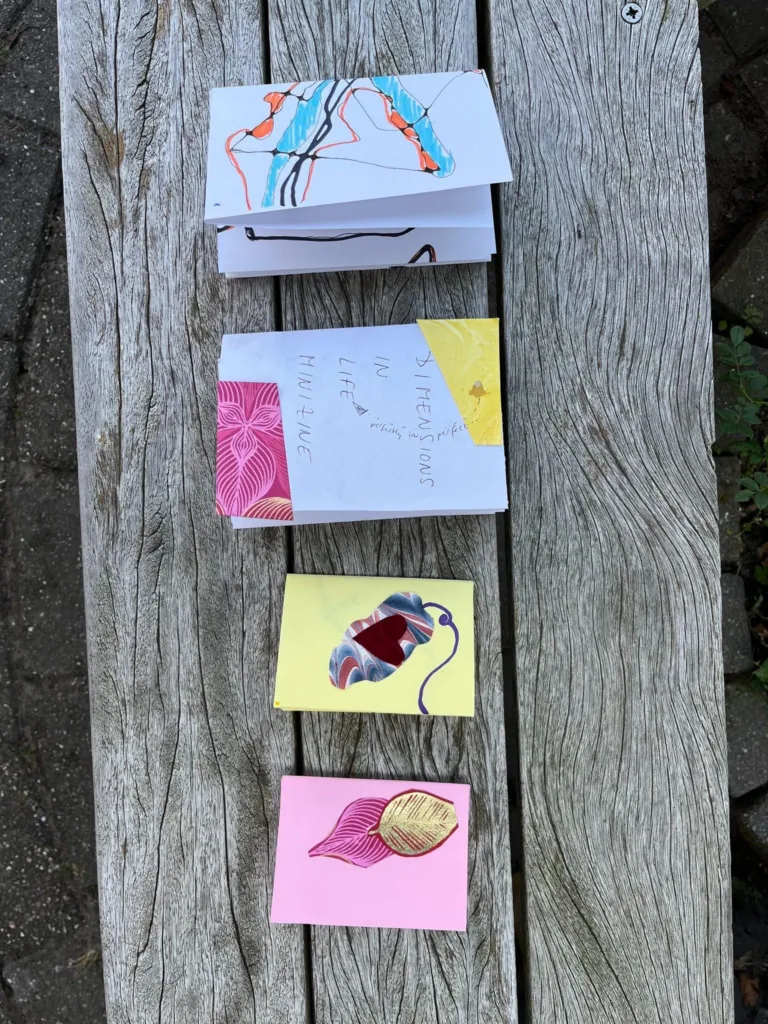
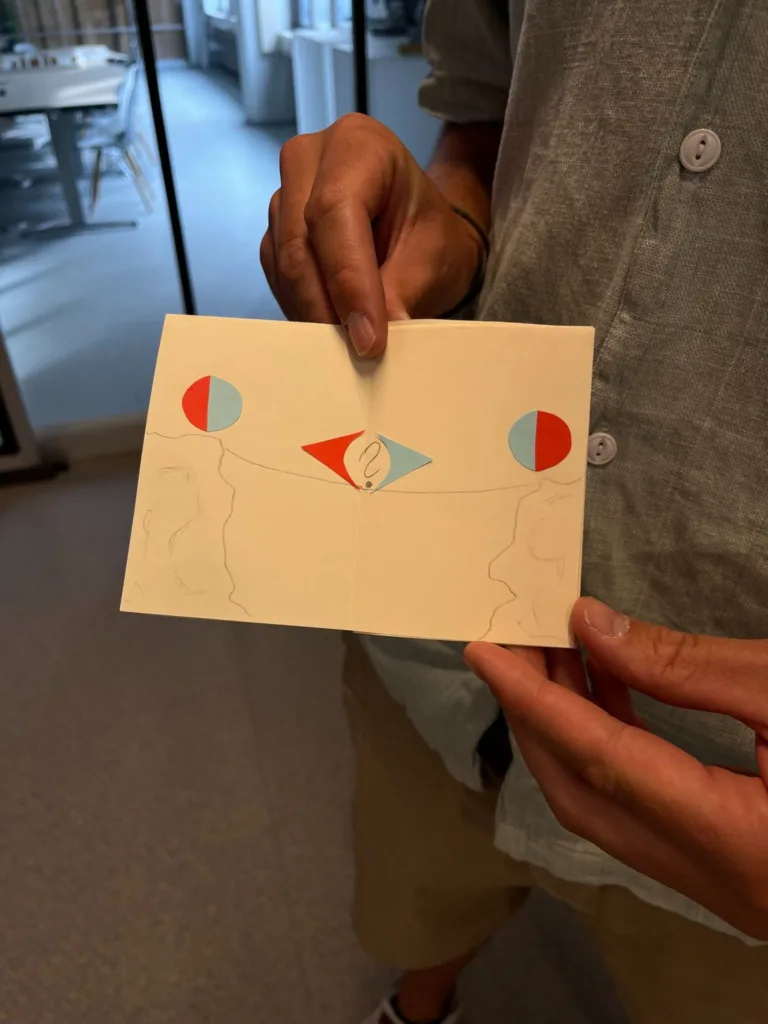
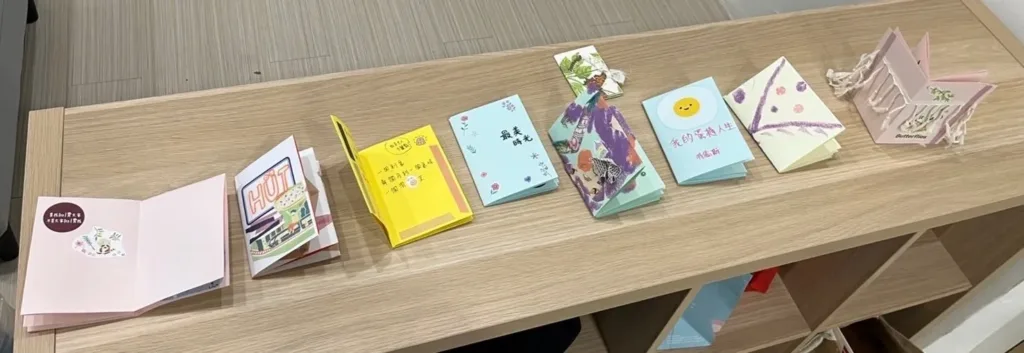
The part of me that identified as being a facilitator, and the whole human of me, was mindblown as I get to witness the subtle yet powerful shift participants go through. Munching sour, sweet, bitter and spicy. Writing, chatting, walking and breathing. From bringing bites to share, to sharing stories, to crafting their own mini-zine as a meaningful artefact after the whole experience. Discovering and unfolding multiple layers and dimensions within one selves and between us all.
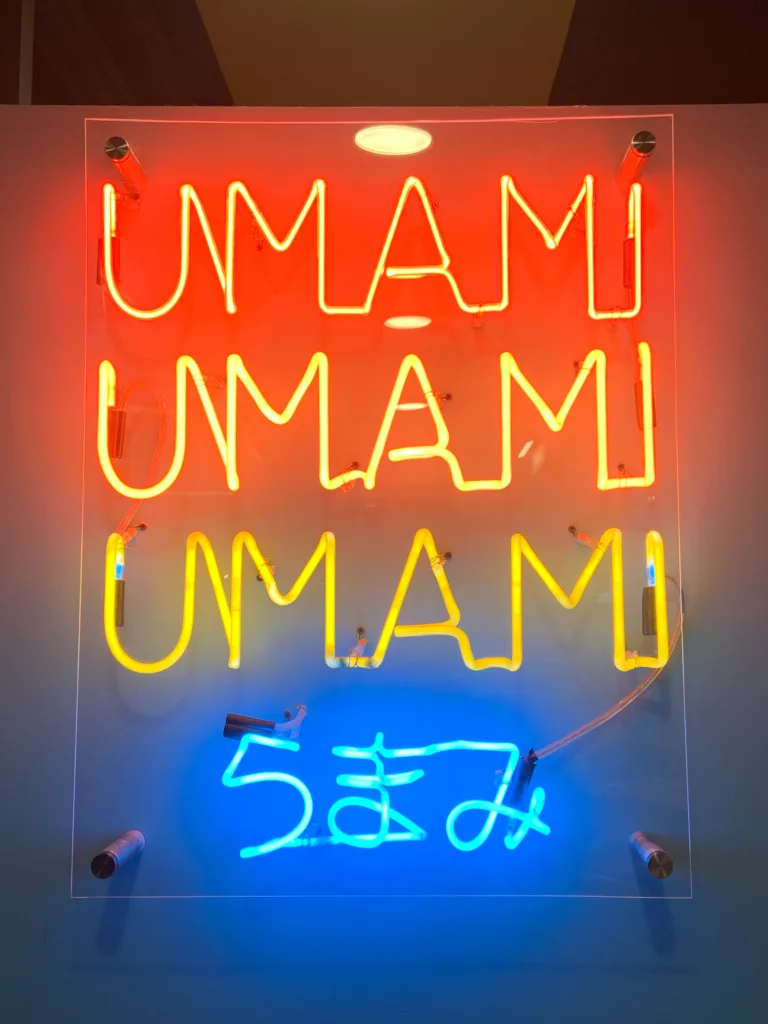
The journey of the writeshop in which participants sink deeper into the process of retreat, reflect and reclaim, feels and tastes like umami. Umami is a savory, meaty, or brothy flavor that adds depth and complexity to dishes. Something that has a mild but lasting aftertaste associated with salivation and a sensation of furriness on the tongue, stimulating the throat, the roof, and the back of the mouth. It is not considered desirable as a standalone flavor but adds complexity when paired with other tastes.
The folding of the one-dimensional paper, after the cutting, represents ‘coming alive’ in a different shape. As beautifully described by anonymous respondents in the participatory research:
I can’t imagine eating or drinking raw eggs, or just licking salt alone, or sniffing vanilla. But their combination and other ingredients with oven heat produce a memorable cake. This reminds me a bout the life’s incompleteness when one operates in isolation, we need each other, unity is strength, we supplement each other in the life journey to achieve our life dreams. Life challenges also form part of the recipe of the life journey. Some of the strong values I attach to this dish are resilience, teamwork, high self-esteem (feeling valued at all times) and empathy. These values have supported me through life obstacles, goal-setting and decision-making processes
and also:
There is no version of perfection in Black cooking. Sometimes you get it right, and sometimes you get it wrong. That is part of the experience of eating it together. It’s as much about the food as the story you tell about the food.
Both umami and life are multifaceted and rich in complexity. Life itself encompasses various dimensions, such as physical, emotional, and intellectual aspects. We should allow ourselves to notice signals and follow the Tao, cultivate awareness (second training) and move through life. Burning one’s wood and with that fire, prepare (unfolding) food (deeper insights coming from the essence level) to share so others can enjoy (digestion and spreading of roles).
Like this poem by Hafiz, the Sufi poet:
A Hole in a Flute

I am a hole in a flute
that the Christ’s breath moves through.
Listen to this music.

I am the concert from the mouth of every creature
singing with the myriad chorus.

I am a hole in a flute
that the Christ’s breath moves through
Listen to this music.
The Christ’s breath as described in the poem is like the field. An invisible force that is always moving us, though we are often unaware of its presence. A guiding wave that is invisible and immeasurable. Being in the field with Processmind. Following the organizing principle that knows in which direction we need to go in a given moment requires third attention for subtle pre-signals that ‘float’ in the hyperspaces/parallel worlds. And that floating….. brings me back to how I start to write the words and sentences of this final project. Floating into writing, following the subtle flirt that was pulling me. Floating…. like how my recurring childhood dream was sending me a message to switch perspectives on the concensus reality level, and embrace my awkward position in a certain context and getting in touch with my sentient self, which exists beyond time and space. Non-locality and non-dual.
My Mandarin name, which almost no one uses nowadays, not even my mother, holds a special meaning in my heart. Shih (詩) means poetry and Hui (惠) means gratitude. To show gratitude to all the amazing beings who were and are on my path, the closing of this final chapter comes in the form of a poem that reads like a recipe, for life.
📖 “Ordinary Sugar” by Amanda Gunn
“Aunt Mary made graham
cracker cake without
measuring cups, divided
one pound light
brown sugar with a knife,
half for the cake and half
for the pearlescent
hand-beaten, double-boiled
icing. Aunt Earline made
yellow cake with frosting
of real fudge—234 degrees
and all, slow cooled, poured
just before the rapid and
irrevocable hardening.
Ordinary sugar coaxed
to its epiphany.
An heir to their confectionary
sleight of hand, I keep
their notes pressed in a book
and safe. Sugar is poison
to my arthritic knees,
but their recipes will rest,
nonetheless, pristine,
not spoiled with things that
just seem sweet. I’ll make
savory dishes out of what
grows green, what snaps
pleasurably, what must,
after twice the loss
of such women, be plenty.
Of Grandma Mattie, sugar
alchemist, it is said, if they
were all she had to hand,
she could make sweet potato
pie out of russets. Seduce
their pale starches until they
tumbled into caramel.
What the loving living tell.
I remember her gleaming
glass eye, her pregnant
wordlessness, her spinning
through the kitchen hot
and fast. Too, the ruthless
manic canning, putting by,
putting by, against memories
too near starvation—the
machine in her belly built
to last. I do not have preserved
in my book how she seasoned
her pear chow-chow or trapped
the summer gardens her labors
made lush. I know only that
she fed the earth her eggshells
and morning coffee grounds,
that she harvested continually
and in fullness, the tender skins
near breaking, near sugar,
always before the chill. Not one
bite lost. She’d mastered,
in a life, how to grow
a winter meal, to till, to weed,
to water, to tend, learned how,
I hope, to be satisfied.
Help me, Lord, to be satisfied.
I was born impatient, under
a vibrating star. But my mother
taught me gently, before
it ached us both to stand,
how to slice fat into cold flour,
sprinkle ice water by tablespoons,
form a perfect discus of dough
without touching it. Unfurl
the crust from a good
French pin. Brush with milk.
A proper flute. Taught me,
too, how to discern and sort
and sugar down the fruit,
and when to fill the plate,
and when to wait, instead,
for the juice to come in.
a recipe and a poem each have a measure at the heart of them — a measure about pain, a measure about love, a measure about pleasure, or about survival. They’re giving a certain form of instruction that can turn you either towards the deliciousness of food or the deliciousness of language, that can help you look at your own life and feel like you’re finding something from it in the engagement with the writing.
Pádraig Ó Tuama