GRATITUDES
Since I went to my first Deep Democracy Institute (DDI) seminar, I have never turned back. I love it. It is my support system. It gave me a platform to look at life from a new perspective. I was carrying so much and I didn’t know that in this world you could look at life in the way that Ellen and Max Schupbach my teachers opened up for me. I kissed many frogs. I saw my life in my own hands. I discovered that I have the power over my life. I could never relate to that before –until then, my life had control over me. Now I know that so many things can come onto me, but it’s up to me how I handle it without resentment, anger and guilt. In that first seminar, people could talk about the frogs they kissed, laugh about it and feel lighter. Now I realize that so many people go through things.
I close my eyes. A lot of people are sitting around me. A huge group surrounding me who have given so much support to me. I am here, with my inquiry project, I am smiling. I am seated. We are having a beautiful gratitude ceremony. I am so grateful for the person you have all helped me become. If not for you, I would not have got to know the identities in this inquiry. Thank you.
I don’t want anyone from my past to feel guilty. You contributed to who I am becoming. It stirred me up. If we cross paths again, thank you. From my heart, I don’t regret anything.
Thank you to the DDI community. If I didn’t know about Processwork, I wouldn’t know about my three identities who are main characters in this inquiry. Thank you to Max and Ellen for introducing me to Processwork. If it weren’t for you, I would not have been able to go on this journey with them.
Thank you to my guiding team who have been supporting me to make this inquiry. Specifically to Julia Wolfson thank you for being with me step by step along the way, from my every heart.
To Ruth Weyermann my main coach, for being so supportive to me over so many years. You are an amazing person, I love you so much. If it wasn’t for you, I wouldn’t be here today.
To Nader Shabahangi, thank you for our sessions and being part of my team and helping me become the person I am.
Gratitude to the DDI community through seminars and learning together, me from you, you from me, thank you for the support through my hard times.
Arny and Amy Mindell, I watched your videos on You tube and learned so much from you. I was honoured to attend your seminars. Thank you so much for the learning.
I also want to give gratitude to my ancestors. My mother who passed away in the spirit world – thank you so much mama. You made me the woman I am today. Rest in spirit. I am not yet done. I am still in the process but I promise wherever you are in the spirit world I will make you happy.
To my sister: I am smiling at the same time as tears are rolling down. This is the first time I am addressing you since you passed. Through this gratitude I get to give you my gratitude and express to you. You gave me the best support. And every time I make a decision, I know you are looking down and smiling, and thinking, what is my little sister going to do now? I am going to become the sister you are proud of. Thank you sister, may you rest in peace.
I also want to express gratitude to my daughter for the support. I know you have a lot of questions running: What are you doing? Why are you on a call? I hope you get to read this someday and meet my teachers. You are an amazing daughter and mama is going to make you proud. I want you to become the best version of yourself. Thank you so much.
To my husband thank you for your support. You have never gone against me. You have let me be and let me follow my path. I know you are not part of my Processwork path but thank you for letting me be and letting me fly. I don’t take it for granted. Thank you.
To the rock, and my grandfather: gratitude. The two of you are one. You are one but living differently. The rock ever-present. My grandfather is my rock. You made me happen. If it weren’t for you, I would not be here. Through you, I have lived the life I live. Your decisions made me. I lived by them. The life I have lived has helped me maneuver and become who I am. You are living in me. I can’t run away from that. We are blended. Thank you to my rock and to my grandfather. Continue resting in peace.
THE ROCK THAT SHAPED ME: AN INNER WORK
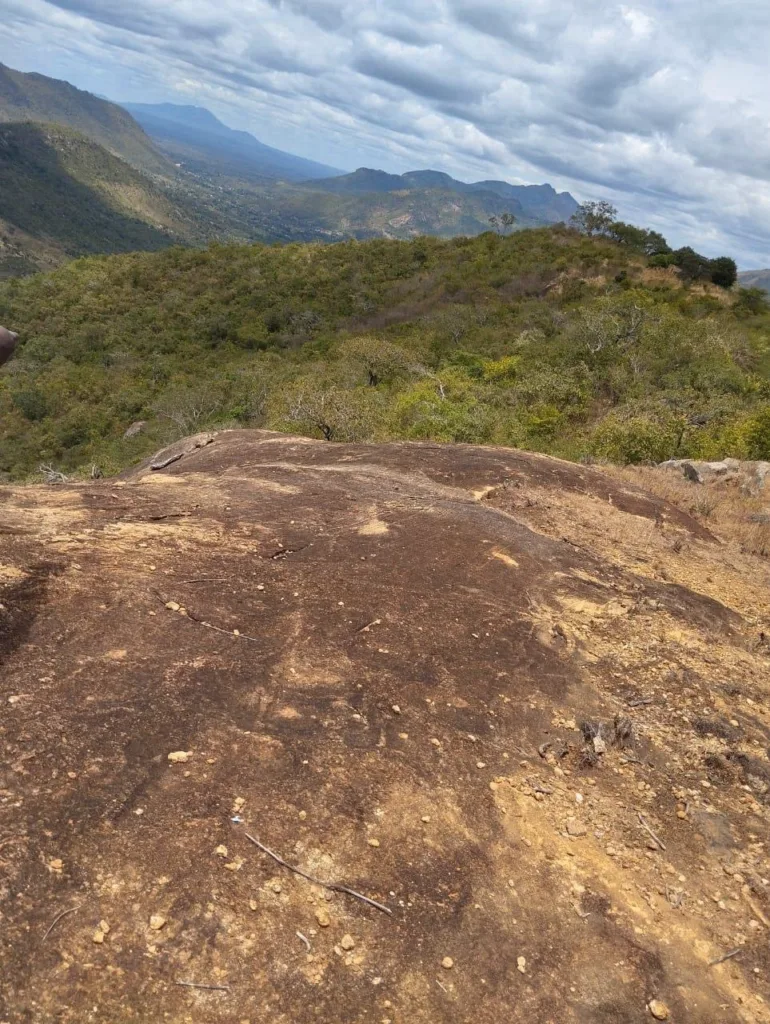
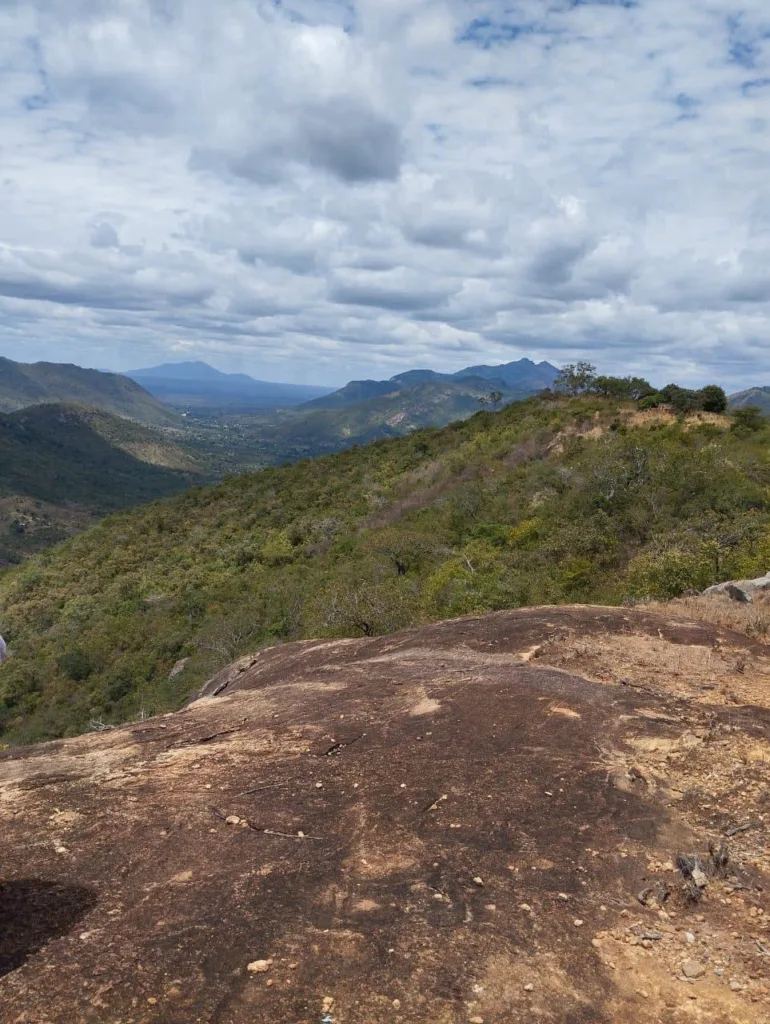
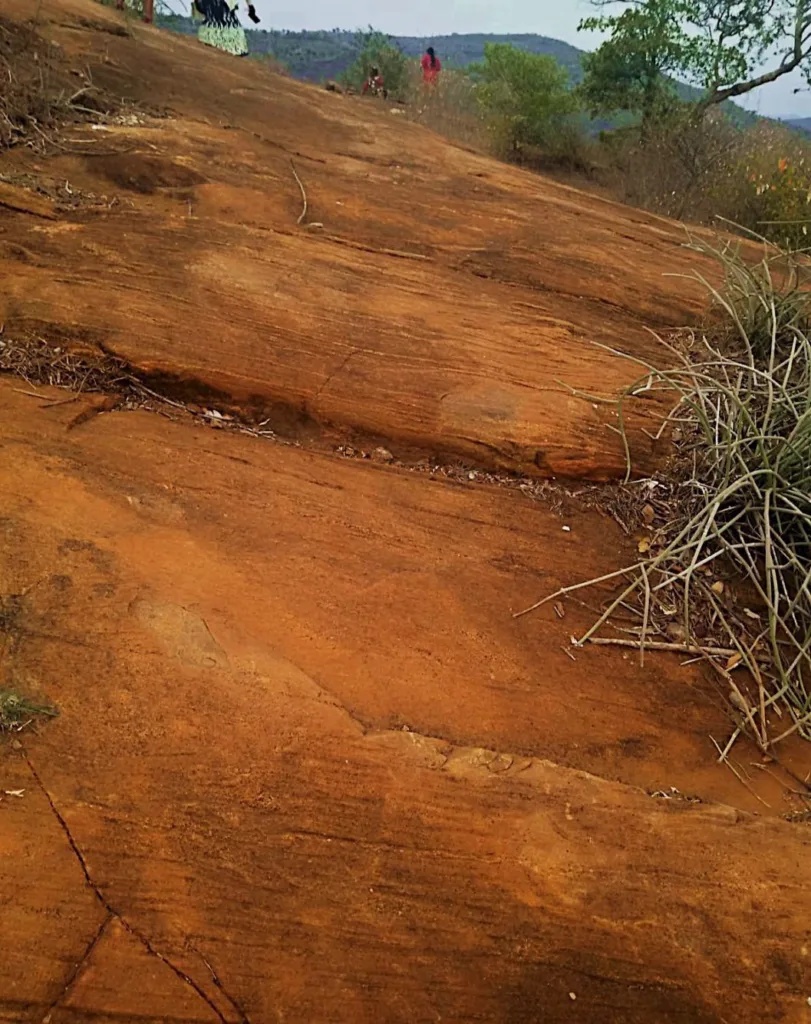
I’m at my village, my home where there is a very big, huge stone, a rock. It’s on a mountain and when you’re there the view is very clear. You can see a huge coverage over the surroundings: the buildings, the houses in Kamba, the name of my village. Many trees around you. Whenever I go home, I go to the rock and stand there, stare, and see how beautiful the environment looks and how beautiful my village looks. This rock has stayed here for years and years. I feel envious because it has gotten to see a lot of people step on it and look at the beautiful environment. And most of those people are no longer there, they have died. And this rock is still very strong, and it still gives the same energy and the children for generations and generations step on it and get to see the beautiful environment that is surrounding it. And I just want to appreciate this.
Jennie to rock: “First of all, thank you rock. Thank you”.
Rock to Jennie: “It’s dawn, I feel I’m holding a huge part of the community. And I feel still strong enough to hold on to generations to come. And I feel so proud that through me, so many people have been able to see and view their environment from different perspectives.
“I want to talk to you Jennie. It’s really a pleasure to see you coming along to explore what I hold here. Because I feel like I hold so much that has not been explored yet. And it’s really my place. And first, I get to be appreciated for the work that I do here. I’ve done this for years. Your aunties, your grandparents have been here on me, you’re here, your great great, great, great grandparents have been here. And you are the generation that is going to for the first time in recorded history, to bring me to light and appreciate me for what I do.
“So I feel I have you, I welcome you to explore with me and show you the beauty that I hold that has never been explored. And I also feel that we are losing this generation and some beliefs of the community and the culture. I feel as a spirit it’s something that needs to be continued with and passed on. And I feel very happy that it’s you, dear Jennie, who is going to pass it to the next generation in our inquiry. Even in your absence this will still count a lot, so I really want to welcome you as the spirit of this rock.
Jennie to rock: “How do you feel about my inquiry project, to get to know myself and my culture better, to get to know your spirit?”
Rock to Jennie: “You Jennie are my community, and you are me.”
Rock to the spirit of Kamba community, and the world: I feel Jennie is so rich in information. And I feel Jennie is a person with different identities. The fact that Jennie wants to speak with the community, means she still very much identifies with me. And I also want to learn so much from Jennie. Jennie is a composition of many identities and she’s very open. I love Jennie so much. There are those who want to learn what Jennie has learned from where she went to, that I don’t know about. And I would want to know, who is Jennie right now? She has come back to me with much capital. What other identities can she bring to my community, and even make it much better? I want to talk to Jennie and find how can we make this a topic? She is appreciating me and I want to learn to appreciate what she has gotten out there in the world from Processwork. Now that she’s bringing it back, I want to embrace that as well. And see how it can be of help to my community”.
Jennie to rock: I identify very much with what you say. As Jennie, I feel this inquiry project is a process of completion for me. I live with three identities: Jennie the mother who has roles as wife and family member. Bubbly Jennie who wants to be free, with a beautiful learning path and professional part as a psychologist with a dream of creating a therapy center for children in my community. And Jennie a proud Kamba woman with a deep culture, country and ancestors – a child of my community and culture. These identities of mine are somehow in conflict. And I want to bring them back to my community here, bring them back together and have a dialogue. They are ready to see how we can work together as a team and not against each other. This process of study is a big closure for me. I feel connected with you when I come home, always I come to you”.
Rock, you are my elder. And you are holding the whole space for me discover my new shape.
CHAPTER ONE – INTRODUCING MY IDENTITIES AND CULTURE
My name is Jennie Mwikali. I live in Nairobi, Kenya. I belong to the Kamba tribe. I joined the Deep Democracy Institute as a student in 2015. I am also a mother and a wife. And I am also a fun loving and carefree spirit. I am a passionate student of Processwork. I am studying psychology at University of Nairobi. I founded the Counselling Outreach Centre in Nairobi for children living with trauma – this has been my dream. My process of healing within my culture, has supported me to create the Centre.
In this inquiry I am exploring my relationship to my Kamba culture from the perspectives of my cultural identity as a Kamba woman; my social identity as a mother, wife and responsible adult; and my identity as a bubbly free spirit.
Kamba culture is my origin. I feel very connected to my Kamba culture. Exploring my culture is exciting to me, it’s part of me, and so I relate to it as part of my full potential. It has made me who I am. And I also feel in some way culture is controlling the way I live, the way I behave, and how I operate between my different identities: personal, professional and cultural, every day.
Jennie the mother and Jennie the wife are part of the same family unit, with serious responsibilities, and often in conflict with Bubbly Jennie who wants to learn and explore the world.
As a mother, I need to take care of my family very closely. I need to be present for my daughter to mentor her. I feel it is my responsibility. In my cultural tradition, they say if the child is well behaved she belongs to the father. And if she’s not well behaved, she belongs to the mother. It is my responsibility as a mother to teach my daughter a lot of things that she needs to learn about life. And I’m watching her very closely, and every milestone as a mother, I need to check. For example, just yesterday, she had one tooth that was shaking, wiggling. And then I remembered how my mother unplugged my wiggling tooth out of me, and I loved it. My daughter was very curious to know what do we need to unplug our teeth? She had so many questions around it. I had to sit her down. And I explained to her, “If you don’t unplug your tooth, it will grow another one on top of it. And then your beautiful smile may not be so beautiful anymore. And then I explained to her giving her some facts. Then she agreed for me to unplug her tooth. It was a little bit painful, but she loved it. I felt the pain when she was crying.
But then I felt it was the best thing that I can do.
As a wife, I don’t know who is me, and who is my husband sometimes, and I stopped giving myself the pressure to differentiate between the two. I have a duty to build my home and be there for my family. As a wife I have to smooth it out. I have responsibilities. My partner and I met when we were grownups. So there are misunderstandings. And we have our own dreaming levels – our own unique paths, and it is not easy. For example, when I got married, I didn’t know if I should hold on to what I believe in, should I start thinking about us or about me? It has taken time for us to interpret that. At the moment it’s working perfectly, because we are letting each other fly and be, which is a beautiful experience. And the best thing is that, as a partner, I feel I have a role to support him, and he also has a role to support me, but it’s not like you must support me. When I’m feeling caged, I can’t breathe.
Whenever you can support someone, give the full force of support.
I also have another identity: a fun-loving free spirit, I call her Bubbly Jennie. She wants to make this inquiry enticing. She says: “So many people really want to know who you are where you came from, so just do it the way you want. If you make it look boring, it’s a shutdown for me, because Bubbly Jennie is never boring. She is appealing. And this inquiry has to look like her, represent her and show the power in her different identities”.
I have come to understand that difficult experiences I went through as a child in my culture happen in many cultures and affect children everywhere in the world. In part, this inquiry supports my self-healing, and I hope it may also speak to people from diverse cultures who also live with painful childhood experiences. As part of my healing process, I am attempting to give a voice to things which have been hidden and suppressed and not allowed to be talked about. For me, some of these painful experiences include the role some of my family members have played in my life, and the ongoing grief I live with from the passing on of my grandfather, my mother and my sister. Bringing their voices into this inquiry helps me process my grief to live happily, knowing they are also somewhere living happily.
I gain courage and strength to explore my topic into the details because I honestly know it will be appreciated and leave a mark for different generations in my community. I’m imagining my siblings reading and watching the video of my identities interacting, and our kids as well.
In working on this inquiry, I had to interact with a critic in my head, who said, “You have to do this as a thesis, the right way. It has to be serious, even if it’s boring. There is one right way to do a thesis. It has to come out just right. Forget your culture. How you experience your culture is not so interesting. Use the internet for the information”. I realize that this critic is not just a personal fear about the inquiry, it is also a painful product of colonization.
Nowadays, there are not so many people in my community, who are willing to focus on cultural things. That is a perspective – a “role” to use a Processwork term – that says: “What are you doing! This is a waste of time. The culture is not important.” This painful impact of colonization reduces the value of my culture. We don’t learn our language anymore.
In answer to that critic, I remember my grandfather Munyoki, of the Kamba tribe, and he comes to life again. He was a great storyteller. Maybe you dear reader would find his stories interesting! They were all over the place. They never added up and often didn’t make sense. But he made us laugh.
Those in my generation who knew him, and those who came after he died, may want to know what he was like. This is a beautiful chance to introduce him as a way to represent my cultural identity.
Munyoki had not gone to school, but he was very educated in culture and life, so full of wisdom. He always knew how to do things. He was a very brave man. People used to come to him for advice. And he was always very calm, even when he had problems, you could not tell. He was like the rock in my prologue. When he passed on, a lot of things changed in our family. Life was never the same again.
We became disconnected as a family. We used to come together because of him. And now that he’s not there, it was very hard for my aunties and my uncles to come together. It was like the rock had fallen.
There’s so much to explore about the Kamba culture: our songs, our dances, our way of living in earlier times, the way they used to prepare their food, their migrations and so on. There are many things I don’t know about my culture. And I am also aware of painful things that used to happen in the past as part of my culture and are maybe still affecting many of us. I know there are hidden things that I and others haven’t fully talked about. I want to explore these more hidden parts, as part of my healing process, and maybe contribute to a broader cultural healing.
I also want to explore how aspects of Processwork were already present and used in my culture in the past, even without realizing it. For example, working with conflict. Let’s say there was a conflict in the past, in my community. There was always a process of resolution. If you have a conflict, maybe for example with your neighbor, there were kinsmen who could sit you down and tell you, “You know, you’re not supposed to do this or that. What is the problem?” In my culture, this was the named facilitator. This kinsman or elder could step into any conflict to ensure a resolution happened by the end of that meeting. And there is a special place, a Tomé where they would go to process the conflict until they reach resolution. This was a physical space, whereas in Processwork it’s an awareness space.
CHAPTER TWO – MY APPROACH TO THIS INQUIRY
Using my oral tradition to access information
This learning inquiry is an analysis of my internal group process, through a Processwork lens, that takes places between three identities interacting within me: my Kamba culture, my role as a Mother, and my free spirit who I refer to as Bubbly Jennie. I am often disturbed by their interactions. Until now have not made space for them to get to know each other’s differences and find some common ground. I long for this, as I am guessing that this may make it easier for them to live with each other, for me to facilitate them when they are in conflict, and for me to find beauty and direction in their presence.
The approach I am taking uses storytelling, which is how in my Kamba culture, learning and conflicts were traditionally addressed and resolved.
I spoke the story into a recorder, which enabled me to access the gifts of my Kamba culture’s oral tradition as the basis for my written inquiry. In our culture, oral methods were natural. Storytelling was an intuitive way to express ideas, and surface information. Storytelling was a resource for decision making. The Kamba way of doing things is to tell stories for bringing understanding, for bringing people together. That is what has worked for us. It is part of my cultural ancestry and heritage. I experienced this with my grandfather, and I learned this from him.
We also had traditional theatre, as a way to communicate with each other, before phones and written communication. People would gather especially at night, in the Tomé. This was a beautiful place just outside the village, two minutes’ walk from my grandfather’s house. Here we told stories and shared food together, in an open space. This was the only means of communication, passing on personal stories to the different generations.
To me, this storytelling is the spirit of my grandfather. We would be told stories of the past, of what happened, as a way to learn to live well, about conflict and how to conduct ourselves. It was very crucial to make sure that no information was lost along the way. My grandfather didn’t know how to write. The only means he could use was storytelling. So it was very important. And I feel privileged that I can put it down on paper, with the support of my studies in Processwork, and that the meaning I have made from my memories as crucial for my path, can be passed down the generations.
I imagine reading my inquiry to my grandfather. He would be so happy. If he was alive, he would be fully supportive. He wanted me to be an innovative voice. I imagine him saying to me,
“When you grow up, I want you to pass this on. I don’t know how your time will be or how far technology has gone. But I will want you to pass it on. It is your turn now, to put these ideas to work. I will be so happy and impressed that there will not be breakage of communication and that information will be passed on”. My grandfather did not go to formal school, but he encouraged us to go to school. I’m going to pass on my way of living with the roots of Kamba culture, through this written inquiry – something that he could not do. I’m fulfilling a dream of my grandfather, creating this inquiry the Kamba way.
Processwork references
Learning Processwork was for me very natural because it was a style of learning that was so familiar from my storytelling tradition.
In 2015, I was invited to attend a seminar with Max and Ellen Schupbach. Attending a seminar was a new experience for me. I was reluctant. I felt chaotic just thinking about it. But I decided to go, and give it a try. The seminar topic was “Kissing the Frog”. Every single detail of that day is still in my head right now, including the clothes I was wearing. I was not prepared for the release I experienced. It was a magical experience. I got in touch with things I really cared about and wanted to change in my life. It was time for me to face and interrupt all my fears, to face every challenge no matter what. I have a history that I was running away from but was very close to me. I was running away from my culture, from where I have come from, and from the trauma I had experienced in my life. I had a lot of bitterness, a lot of anger. I felt that my public identity and my cultural identity (I was not yet a mother) could not come on the table. But at a certain point during that seminar, I came to realize that it’s time. I felt for the first time, how everything that defines me, belongs to me.
From then on, I attended many seminars when Max and Ellen came to Nairobi, multiple a year. I also attended DDI intensives with the larger global DDI community.
I watched many videos of Arny and Amy Mindell, the founders of Processwork. I remember the feeling of being totally captured by their voices and stories. The lessons sunk into me. I was looking for something that could give me a lead to what is deep democracy, the political aspect, and how I can incorporate it in my life, my growth path, how it can be of importance to me, because I was still very young and growing up. That is what I was looking forward to when I was googling for YouTube videos of Arny and Amy.
I watched many videos of Arny and Amy Mindell, the founders of Processwork. I remember the feeling of being totally captured by their voices and stories. The lessons sunk into me. I was looking for something that could give me a lead to what is deep democracy, the political aspect, and how I can incorporate it in my life, my growth path, how it can be of importance to me, because I was still very young and growing up. That is what I was looking forward to when I was googling for YouTube videos of Arny and Amy.
Addressing trauma in this inquiry
When I met Processwork, I was in a spot in my life where I felt ashamed of my culture. I didn’t want to deal with where I come from, I didn’t want to be associated with my culture.
During that first seminar with Max and Ellen, I became aware of things I had gone through as a girl, and as a woman, that were painful. I felt tight, in a cage. These things are connected with being raised as a girl and a woman in a traditional way. I ran away from those experiences and moved away to live a new life in the city. But they stayed with me. I have decided not to go into detail about these experiences in this inquiry, so that my family can feel comfortable to read this inquiry.
The main point I take from those painful experiences that I want to bring to this inquiry, is that I wasn’t allowed to stretch as far as I could. I felt that I really needed to fly. That is what came out during my process that day in the first DDI seminar. I felt very small. Just like a woman being see and not heard. But through experiences at the seminar, I could see my dreams. I realized the powers that I have, that I had not yet been able to see or express. This is what helped me come to terms with traumatic events. And I realized how much conflict there was inside me, between my public Jennie and my Kamba origin, that I had to resolve within me. At that seminar, I realized the power of conflict resolution. I had not heard of it before then.
Inside me was anger and denial. And I experienced self-blame, public shame, feeling so unworthy of myself. And I was so full of regret that I was not fulfilling my life to the full. I felt like I owe somebody an explanation, I owe somebody my life. I thought, if I’m not living a good life, it is because of my culture. I was blaming my culture all the time. On the one side, I felt, “Bubbly Jennie is so good! She knows what she wants. She’s focused”. But then no matter how much I tried to make a step, there were a lot of things stopping me from moving, I was stopped by culture, so I thought. I constantly felt I’m being pulled behind as a woman. I felt I could not make decisions.
The focus on conflict resolution in this inquiry
Imagine my joy when I learned on that day, at that seminar, that there is something called conflict resolution, a good way of communicating with people in a way that you can bring an understanding.
This is what used to happen in the Kamba culture. If there was a conflict, you can sit down, talk about it, with a facilitator. And then there was a resolution by the end of the day.
My grandfather was a community leader, a consultant and a peacemaker. A lot of wisdom came out of his mouth whenever he spoke. People came from far to seek advice from him. When people had disagreements, they went to him, and he would solve issues in a fair and wise way, so peace can prevail. When people were talking he questioned them, to know, to dig deep, what exactly this person means, peacefully, in a very natural way. And in a very fun way that you don’t feel like you’re being pinned down. Because even if you did wrong, he had a way to bring every shoot out without making anybody look bad.
This process of conflict resolution for me, started with working on myself. I did not start immediately with my family. No, no, no, no. I knew I couldn’t take what I gained through that seminar to other people if it wasn’t in me. I had to do away with the things that were weighing me down so that I could move forward. I wanted to be able to tell people how I got up to date instead of being stuck in my past.
I look back, and say it was a beautiful experience. I don’t know for how long I could have dealt with that burden; that shame, the anger, the guilt and the conflict that was always going within me. I was carrying a very heavy load and I was projecting it onto culture. That day, at the first DDI seminar I attended, I started to work on it. I agreed with myself that this is part of me. It’s now been years down the line. And at this moment doing this inquiry, I’m talking about it for the first time. The next chapter tells how I set up the interaction between the conflicting roles inside of me: Culture, Mother and Bubbly Jennie.
CHAPTER THREE – SETTING UP MY GROUP PROCESS
The interaction between my identities is the core of my research and is represented in a 20 minute video. You can click on the link in the next chapter. In this chapter, I am setting up the scene and conditions for this interaction, which I am calling a “group process”. I’m using group process in my inquiry to explore the relationships between my different identities, by facilitating them to talk with each other. Group process is a beautiful interaction between two or more parts interacting within a group to find out more about a certain topic. Everyone gets to express even suppressed experiences and give different views. This is very healing.
In my inquiry, the field or environment I am observing and facilitating is my inner community with three roles. I’m the facilitator of the interaction between my identities, I’m also a researcher of the inquiry process, and I am a participant in the group process while researching myself, my culture, and the joyful and painful experiences that have influenced me from family and culture. I am seeing how far I can stretch myself as a student of Processwork and a student of life in navigating my edge to looking at painful things. Edge is a Processwork term for an experience where you might feel you are tired, or you don’t want to move on. The edge is an experience that is stopping you from letting go into a new, unknown aspect of your identity. I feel supported remembering I have already crossed many “edges” to become the person I am today, with my joys, fears and dreams.
Process work and my culture
The Processwork term “role” means different voices in a given situation. These roles talk and come to a resolution. Roles are representations of a certain voice or perspective that is present in a group. You can express a role being a voice in the group that is not yours personally in that moment and is not yet being represented.
I now realize that my grandfather knew about roles. He used to ask me: “If someone wronged you, how would you react?” Now I realize, he was initiating in me the ability to “role switch”. Role switch is a Processwork term often used to describe the experience of absorbing and connecting with the experience of another role, the experience of your opponent, or even opposite viewpoint, as part of arriving at a deeper understanding.
My grandfather could also capture the roles in the background and name them. These are roles that are not obvious but are present and disturbing, like ghosts. These hidden roles are often forbidden in the given culture or group, which is why Processwork calls them “ghost roles”. A ghost role represents something forbidden or taboo in that particular group or culture. People don’t want to touch it or point it out directly. It’s not supposed to be said. It doesn’t have a voice to represent it, so it becomes a ghost role.
For example, one time my brother was sent by my mom to go to our grandfather’s house to take my grandparents their breakfast very early in the morning. He was told by my mom, “Don’t take too long, please come home early so that you can continue with the house chores”. My grandfather used to light a fire in the middle of their house. When they woke up, he and my grandmother would step on two round stones to warm their legs because it was very cold in the morning, and they were getting old. So when my brother arrived, he joined them stepping on their stones. And my grandfather started to tell stories, so he could not leave.
After a while my mum realized, “I sent this kid hours ago, and he has not come back”. She went there and found my brother. They were telling him stories, they were laughing, having a good time. My mom started quarrelling with my brother, she wanted to beat him because he was disobedient. Then my grandfather picked up my brother, and he covered him with a blanket to hide him from being beaten by my mother. It is not allowed traditionally, for my mother to get close physically to my grandfather,
so my brother knew that he was very safe there. Then my brother started laughing to be hidden in that blanket. In this situation, the tradition that my mother cannot get close physically to my grandfather was a ghost role in the atmosphere. Nobody spoke about it, but everybody was aware of it. My grandfather also took on the ghost role of the disobedient one, and said, “It was me. Don’t beat this kid. I told him to stay”. He could resolve conflicts in a very amicable way.
In my community, we would come to the elder for a process to resolve the conflict. My culture recognized the importance of having a named “facilitator” for a conflict. Everyone understood that conflict costs relationships, costs livelihoods. The facilitator supported the parties to role switch and go deeper in understanding the other side towards a resolution. The facilitator also could capture the edges between known and unfamiliar experiences.
The “elder” in my grandfather’s time, could help the individual to process those roles in a calm way. They understood from their wisdom that without processing these roles, for example, if someone is at an edge, we can’t get to a resolution. They could move with an individual person without taking sides. They created an environment which was very favorable for those involved to get a resolution for the community. Both sides would be at peace and could work together again. Processwork borrows from indigenous cultures with the term elder and eldership but recognizes qualities of the elder in a person of any age who can see the bigger picture and understand both sides – like my grandfather, encouraging me to practice role switching, or my young daughter, who opens me up to me aspects of childhood that were not part of my experience.
In Kamba culture, working with conflict directly was seen as important, because conflicts were very real and affected the families, the community and their survival. People depended upon each other to work together and not against each other in the fields, with the animals. Their livelihood depended upon it. That is why peace was their main aim.
One difference with Processwork conflict approach might be that the aim of conflict work from a Processwork perspective as I understand it, is to facilitate awareness of what is trying to happen, and support that to come out and get resolved.
“Deep democracy facilitation” is like nurturing an individual’s deeper self with diverse, even contradictory aspects. At the group level, this is a very open and beautiful feeling where the group gets to nurture themselves. It’s an opportunity to get together and bring out the best of themselves in a group. In this inquiry, I am applying group process ideas to facilitate my inner identities.
“Inner work” is making space for your inner experiences so that you can work on yourself experientially in your life as an immediate experience inside yourself. At that moment of relaxation you can discover what is really present inside of you, as a deep democracy facilitator of a group process. My entire inquiry is for me, a way of doing inner work in public.
My culture and Processwork have a common focus on prioritizing and tracking different levels of experience. The consensus reality level is every single thing that has a name. My rock, for instance, is place I can go to in time, in a physical location in my village. My rock also has non-consensus reality levels. A subjective, dreamland level where the rock activates memories and experiences, both painful and joyful. My rock also has a sentient dreaming level where we are one with each other, the ancestors and the universe. I speak with my rock, my rock speaks with me. I feel the rock. Part of me is the rock. My grandfather and my ancestors are alive in my rock. My rock is timeless and part of nature and the universe.
At the dreaming level you can feel and imagine and be one, even though you haven’t executed the idea you are getting yet. It is still in your mind. If you speak about it, it’s already happening before it executed at the consensus reality level. In chapter four, I describe how the resolution that my inner identities arrived at in the facilitated group process unexpectedly happened in real life – in consensus reality. This was a total surprise to me, and is an example of dreaming unfolding into consensus reality. This will be revealed later!
Finding my topic
My rock says: “I want to know what Jennie learned from the outside world and bring it back to our culture”. And this reminds me that I want to find out, what can Processwork bring back to my culture? What can Jennie learn from her culture, and what can Jennie’s culture give back to Processwork? And now, I realize that my question is a group process – meaning, there is no one right answer. There are many perspectives, or roles – some more obvious, and some more hidden – the ghost roles that want to become visible and interact with each other through my three identities.
And now, my topic comes to me clearly, as a question:
Can I show what my culture can borrow from Processwork and what Processwork can gain from my culture?
This is the question at the heart of my group process to discover, Who is Jennie? I am creating here a new kind of “Tomé”. Tomé is a Kamba word for the place where conflicts got worked out. My Tomé is not a physical space, but an awareness space where I am attempting to unfold, learn from, and integrate the insights I gain into my life.
Munyoki
I close my eyes, and my grandfather comes into my mind. I feel connected to him. He was teaching me a lot of things about culture. He was very slow. He made boring stories about our culture interesting. Most of the time he exaggerated so the stories would look appealing and enticing. He was full of stories. Every time we went to him, he was so full of stories, about the past, about our culture. If you want stories, your body just goes to him. To make you stay, he would tell a story. We just laughed and had fun. His stories were really exciting. When I try to sit down and think, What were those stories?
Many things he was saying weren’t quite adding up. Why did he exaggerate? He was just a really good storyteller. I loved the stories and the songs he would sing to us.
For example, the story of a healer called Malala. He told us:
“Malala is very tall, the tallest in the village, but she didn’t live in the village, she didn’t have a home. She walked with a walking stick. She carried a purse – a sling bag that she put across her chest. Inside that purse were healing potions for her to heal all the wounds in the world. She only had one leg, which was why she used a walking stick, but she could walk very, very fast with one leg. There were many villages to visit to do her work, and because she had one leg, she would take one big step with her one leg to get to the next village. When she raised up her foot, she would reach the next village. When she raised it again, she would reach the following village, and so on. That is how she travelled to do her healing work, stepping to the next village with one foot, each day.”
We children laughed and laughed. It was a very beautiful story. We understood that whenever you have a wound, Malala will come and bring a drop of her healing potion and you will be healed.
Whenever you have a wound, grandpa would say, Malala hasn’t come yet, but when she passes, your wound will be healed. And then, we would say, “Look Grandpa my wound is healed!” And he would say, “Ah yes, Malala has been here. She came! She passed here! See! Your wound has healed”.
I imagine myself as a child. Here I am with my cousins, he makes us all stand in a line with our uniforms, tuck in our T shirts. He says, “You have to look proper in your uniform.” And then he makes us dance. We stand infront of him. We line up and arrange ourselves to make him happy, so he will tell us a story. So we come singing to him. We dance for him. Then he says, “Now I’m pleased that you’re dancing. You can sit down. I’ll give you a story today”. Today, I am laughing. My childhood was awesome. He has his own way of making us do something together with my cousins in a collaborative, creative way.
I notice part of me is excited to bring these stories to life and pass them on to a new generation. And then another part of me appears: A shy little girl, very shy, folding her hands and pressing them into her lap.
She says, “I don’t want to go down into my culture. It will bring very sad memories”. And: “I don’t have much knowledge about my culture. My bigger brothers know so much more than me. I am the youngest one. I was just born the other day”.
Then her hand reaches out to hold mine, and she gives a big hug. I feel her arms around me; I feel safe. And … I also feel tight. I’m tied up. I am afraid, that with those memories I will feel like I’m in a cage and not able to stretch. There are painful things that are hard to talk about. One part of me is a good girl, that wants to do what I’m told, but also feels trapped in a cage.
This inquiry is giving me a space to learn more about acting freely and going for what I believe in. But I also have a fear to step into this space because of the trauma part. I have educated my head that somehow, I need to go down that lane which I have avoided until now. There are things in the culture I haven’t wanted to touch on. This is scary, very scary for me. I kept telling myself, “You need more time to work on that”. This is me at an edge. But now I have checked with myself, I’m ready to incorporate these things I have avoided, and bring them into my inquiry. I have to explore each identity to the maximum, without leaving out details. Now I become aware that this fear is also behind wanting to make my inquiry look appealing. Here is Bubbly Jennie whho wants to enjoy life, creativity and adventure. Going deeper, I become aware that creativity is also present in my culture.
My childhood was awesome and my grandfather very creative. He was an amazing grandparent. He had his own way of bringing us together as a unit and making us do things together with my cousins in a collaborative way. We didn’t know that at the time. I have learned that in this world, creativity is needed in education. He tried to instill that in us. He himself had not gone to school. That makes me think how great an elder he was, and how educated he was. He knew his own ways. Within the Counselling Outreach Centre for children that I founded in Nairobi lives the spirit of his cultural creativity.
Healing childhood trauma and wounds of history
This is a very sensitive topic. And it’s something that I want to find out more about through this inquiry. The child Jennie who feels small and is holding her hands together feels shy because the arrow of culture and that made her feel so small is directly pointing at her. That arrow made me feel like the marginalized one.
From my experiences in Deep Democracy Institute learning community where I have participated in many group processes with fellow Kenyans and with people from around the world, I now understand that I’m not the only culture that has experienced colonization and continues to live the impact every day. I want to look at my history from the perspective of appreciating everything that happened and face the trauma, and bring some healing not only to Kamba culture, but to all cultures going through a similar trauma in their way.
Until this moment, I have never wanted to talk about my life in the village. I didn’t see any beauty in it.
All I could see was trauma everywhere, and I didn’t want to associate myself with it. I knew very well that I didn’t belong there. I knew very well that my dreams are bigger. I was very young and I was just beginning my life. There was no technology for a young person. There was nothing to look up to in that village. Everything was collapsing. And I was very worried about myself. So I promised myself one thing. When I will come to the city, I’ll put my whole effort to everything that will make me progress.
And if I get a chance to go to school, I’ll give it my whole best because I know the torment and torture and the trauma that is there in the village. I wanted to never be associated with my culture. I didn’t want to be associated with that rock, because I felt I didn’t belong there. And I started projecting their anger.
Now that I have said that out loud, I feel relieved, I don’t have to fold my hands anymore. I feel the motherly part in me is creating peace, unity, and bringing Jennie’s identities together in a calming, good way.
Now I hear my motherly part saying: “There is no need to go down that lane. I want people to live happily, I want people to play peacefully. And with a lot of unity, leaving all this trauma behind and moving forward. I want to dance with the other identities and bring up this healing.” In my culture, there is a lot of blame. There’s a lot of hate. And people complain a lot. My grandfather used to complain. And I feel like this is a good moment for a healing way. And now I notice an interaction appear inside me, between little Jennie the child, Jennie the mother and Bubbly Jennie:
Little Jennie, the child: I’m speaking together with many children in our culture. I want to speak to public Jennie who is creating the Healing Counselling Centre:
A big part of me is relying on you. We trust you. We want to explore. And yet we don’t know how to go about it. But we trust you. And we just want to give you a big hug for helping us fix our edges. This has never happened before. We are still dealing with the trauma part. And we are scared. Everyday, every step is a journey. And you’ve been very patient with us every day. So we want to appreciate you for we feel safe, we feel you’ve created a safe space for us. We come from a place where we are forced to do things. Now we feel very appreciated. This helps us feel more relaxed, that nothing is going to be squeezed out of us without our consent. So we want to say to the public Jenny, thank you for you. Thank you.
Jennie the mother speaks: I am so happy seeing this happen. I love what I’m seeing. I really love what I’m seeing. It’s a lovely journey. And I am in full support. I’m somewhere here behind you holding all this together. You’re moving and I feel very protective that nothing could go wrong.
Bubbly Jennie says: I really want to appreciate you for being so accommodating of me. And I know sometimes I’m very swift. I appreciate and I understand what the culture said, that you need time to digest everything. And I want to recognize the trauma that happened, that is still living in the culture. Thank you for creating the space for me to bring anything new to the table as long as it is for the good of all of us. And I’ll try and make sure that anything that I bring on the table, I’ll take it slowly, not with my swiftness. I will try to incorporate everyone and understanding everyone has a different process. I want this to be an inclusive journey. So I’ll go at our pace, not at my pace. So, thank you Culture. Thank you, Mother, thank you so much. It is also very beautiful to look from the perspective of me working with the swiftness and trying to create the Counselling Centre. And now I am ready to speak about my childhood sadness.
The sadness
All the things that I went through as a girl in the village, I went through alone. I didn’t have anyone close to me that time. My mother was admitted at the hospital. I was staying alone at home. And it was very difficult for me to even get sanitary pads which were essential at that time. I couldn’t afford them. There was no telephone to make a call. I was very shy to reach out to anyone. I was also very shy to tell anyone that I was experiencing my menstrual. This is something very deep for me. I didn’t know
how many girls out there are going through the same thing and they don’t have anyone to talk to.
Sometimes I was forced to use unhealthy materials to take care of myself during my menstruation. Later, as an adult, I was working in an NGO, working closely with girls, I started a project to distribute sanitary pads for free. Then I started working with another NGO and I incorporated a lot of girls that I was working very closely with. At that time I didn’t tell my story. Many girls out there are sleeping with someone to get maybe 50 shillings to buy yourself sanitary pads. Now I am ready to bring that awareness that menstruation is very normal. It happens, and it’s okay to ask for help.
At my Counselling Centre, I give sanitary pads for free. I reach out to someone who is travelling silently alone. They don’t have anyone to tell. I love them. I have healed. This is something that is very close to my heart.
This space to talk about my painful history relieves me, and I feel free to continue with setting up the group process.
Gaining consensus for my topic from my inner identities
Before the exploration, I am checking that each of my identities gives me “consensus” as the facilitator to go ahead with the exploration.
Consensus is a Processwork term that means overall agreement on a direction before going into a topic.
My three identities are coming together as an inner group process. A group process may take place within one person, or as mentioned earlier, may involve two or more people with different beliefs, different identities, or different roles that are being played in that process at that moment. I am going to bring my conflicting identities together in a group process, to discover what is happening in their world and find a resolution for how they can work together. This is not easy. This is very personal and very real.
Do they all want to do this? Do I want to go into this group process? And now I see that Jennie the facilitator can use her deep democracy facilitator awareness, to create a safe space for her identities to interact, go deeper and discover new wisdom to take into my Counselling Outreach Centre.
“Deep democracy” is a term created by Arnold Mindell, the father of Processwork. In this group process, the meaning of deep democracy for me, is to create a very safe space for these identities to feel that they are not being judged in whatever is going to happen in our group process. As the facilitator, I want to first check if they are ready to get into this group process.
Do any one of my three identities feel unsafe? I will try to make them feel safe and comfortable.
Facilitator Jennie: I will start with Bubbly Jennie. How ready you are with coming into the middle and sitting in Tomé, the space we have for this kind of conversation? How is this for you?
I also want to check with Cultural Jennie and also Jennie the Mother and wife. If there’s anything that is making you uncomfortable, maybe you can just say it here. Remember, this is a very safe space for all of us. I do not know what shape this group process will take. I do know that some things are very personal. I want to hope that we leave this space with some kind of resolution. And if we don’t get a resolution we can then see together what we do with where we are.
Bubbly Jennie says: I feel very welcome. And I am already feeling very safe. And I’m feeling like I’m the little one here. And I feel I want to explore because you are incorporating who I am. I want to learn more. I feel it’s a really good space for me. I can’t wait. I can’t wait.
Facilitator Jennie asks: Bubbly Jennie, you say you feel safe. What do you mean? Everybody has a different idea of safety. The experience of safety is a group process too!
Bubbly Jennie: Thank you for asking. I feel like I’m protected by my elders. The Mother in me is my elder, my Culture is my elder. I feel like I’m there in the Tomé.
I feel both Mother and Culture are supporting me, and not putting me down with my bubbliness and everything that I believe in. So I feel it’s a very safe space that I have people around me who are willing to nurture me to grow.
Facilitator Jennie: Thank you. Who is next?
Mother Jennie: I feel I shouldn’t speak next. I should give Culture the opportunity to speak As the Mother and the wife, we are taught to give priority to the elders, especially men. Bubbly Jenny maybe didn’t know about that. But since she’s very open to learning a lot, it is ok that she spoke first.
Facilitator Jennie: I notice a “hotspot” meaning, there is a lot of feeling and maybe tension here.
Facilitator Jennie explains: Hotspot is a Processwork term for experiential information to signal that you found something conflicting between the two groups that you are working with. Most of the time you find both groups feel they’re right. As the facilitator, when you find yourself in this kind of situation, you need to at least a bit, slow the two groups down, and bring it to their awareness that here is a hotspot. You can tell them to go slowly. And notice that that is a hotspot. That can help you as a facilitator, because the two groups can move a little bit, to reflect on what just happened. It is also a way of bringing to the group’s attention what is happening. The group tries to get in touch with it, and tries to go deeper with what just exactly happened and what is trying to happen so it can become unstuck and flow. That is the meaning in Processwork of the term “process”. That is also a good way of helping the group bring a resolution.
Facilitator Jennie to identities: Shall we slow down and make space to say more?
Bubbly Jennie: We shouldn’t give the elders the privilege to speak. We can speak before the elders speak.
Mother Jennie: I feel it wasn’t wise for me to speak before the Culture.
Bubbly Jennie: Culture shouldn’t always go first. Why does protocol matter? We are here to have a group process about how we are going to work together. Why does gender matter? Why is it a big deal when I come in to introduce myself? I’m speedy and bubbly, and I feel like I should just go ahead. I want to speak. Why should I wait for culture, who is very slow? And now you tell me: “You should have waited for culture and you to speak. You knew we were supposed to speak first”, I feel stupid.
You make me feel ashamed. I did the wrong thing.
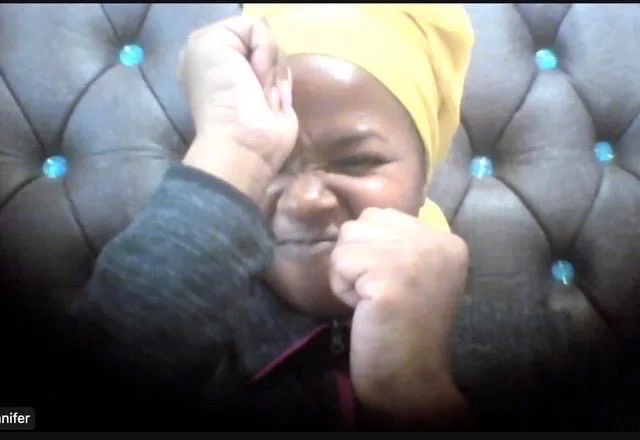
Facilitator Jennie: I would love to slow down to make space to “frame” what just happened.
Framing is a Processwork term for helping the groups that are involved, understand what exactly is happening. It is often the facilitator who has a wide view who frames what is happening. The facilitator watches what is happening in the group and brings it to their attention so that they can understand as they go – rather than get to the end and they didn’t really see what exactly is happening. The facilitator makes a mental note of what is happening and also can tell the group at what point we are at. The facilitator may be seeing or sensing the direction that the group is taking. The facilitator can try framing for the group the point we are at in the group process. The facilitator might try to capture the roles that are involved and try to bring out some of the voices that have not been brought into life so as to incorporate every voice in the process.
The hotspot came in where Bubbly Jennie felt, I don’t know, but I can feel maybe she felt attacked for being told to give priority to Culture? She feels a freedom to be without a protocol. And Motherly Jennie felt there should be a protocol, a way of how things should work out and the Culture felt the same. So now the facilitator just “framed” what happened.
The rock as elder to Motherly Jennie appears: May I speak? You don’t have to put everything in place, you don’t have to carry the whole load. You don’t have to overwork. You don’t have to take care of everything. You don’t have to know everything. Just focus on your own goals and dreams. Don’t worry about anything else. You don’t have to make everything perfect.
Bubbly Jennie to the spirit of the rock: After hearing you my elder, my rock, I feel wow, you’re so full of wisdom. You’ve seen so many things, you have been there before me and are always there. I know this is not the first encounter you’re having with me. You have seen these roles interact over generations and generations. And now…. I notice I feel more relaxed. I’m patting myself and supporting myself.
Facilitator Jennie to Jennie’s inner group: I notice Bubbly Jennie, your hands were fighting before, and when the rock spoke to Motherly Jennie you looked so relieved. I felt a shift in the energy. Is it a “cool spot”? A cool spot is a moment of relaxation, the energy relaxes, people relax, the space cools down and becomes naturally more calm.
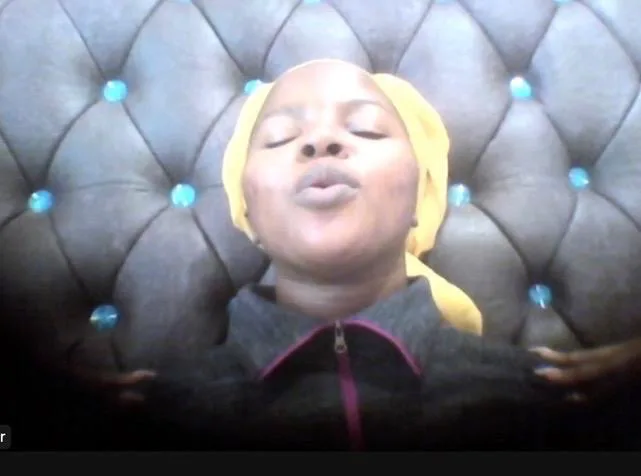
Facilitator checks with herself: Here is Jennie the facilitator, and here are her three identities interacting. Jennie the Bubbly one, Jennie the Cultural one, and Jennie the Mother and wife. I need to check, do they all want to do this? Do I even want to go into this group process?
Jennie the participant researcher appears: And now I see that Jennie the facilitator can use her deep democracy facilitator awareness to create a safe space for the identities to interact, go deeper and discover some new wisdom to take into the Counselling Outreach Centre I founded.
This is very rich. No matter how difficult it is for me to face these fears and bring these memories up, its my way to care about my culture and create something useful for our generation. The people who lived in our culture and could share with us, are no longer here. Back home in our village, culture is very much ignored. What if future generations want to find out someday, where did we come from? What happened? There are details that could be helpful.
And for me, as Jennie, it’s time to step in the space that I have not wanted to step into. I feel it. I’m in. In transit, right her, facing what is down there. What is scary and painful.
In doing this inquiry, I want to appreciate people who are brought up in Kamba culture. Including the ones no longer here. That is the most painful part. One part of me feels I don’t know how I can hold this together. And at the same time, I feel it’s very important that I proceed. Because without them, I wouldn’t be here. I wouldn’t have known about my culture. That the sad part is that they are not there. And I still feel I’m I somehow carrying them every day.
Maybe this would be even more beautiful if they were alive. And I am imagining how my mother would be so happy. How my grandfather would also be so happy. How my sister would be so happy. And I feel those are the most important people in my life. And now having said that, I feel maybe I just created space for them. And appreciated them. And now all my identities can say yes, let’s do it!
Aaah! We have consensus!
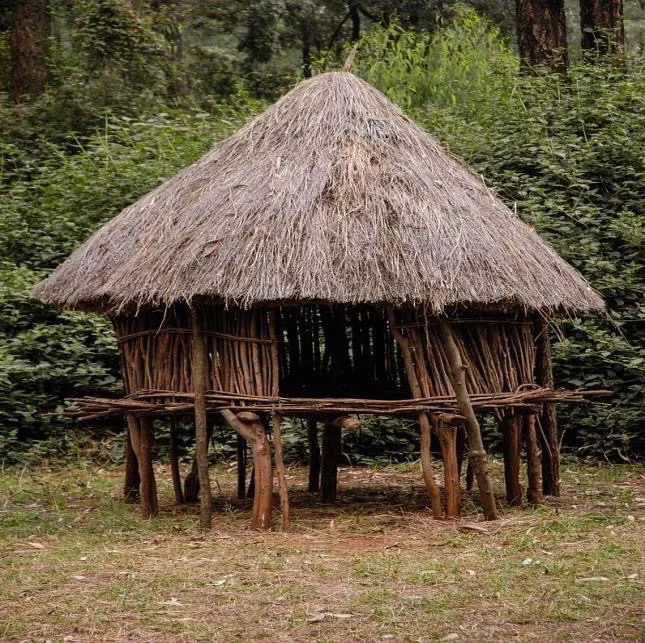
Jennie the facilitator explains: In our village, there a special place called Tomé. It was a beautiful place because here we could learn very well. And sometimes we sit there. It was just outside the village, two minutes’ walk from my grandfather’s house. It is where he told us stories, like in a sitting room. It was a place you could take visitors to talk with them. Here we tell stories and share food together. It was in an open space.
The feeling of being in the Tomé supports me with this group process between my identities. There are stories about the colonization which affected how we relate to our culture. And I also have personal trauma from my childhood, when I went through a very difficult time. Being in the atmosphere of the Tomé helps me to be ready, so I can bring out my identities to their maximum.
Here in the spirit of our Tomé I want to create a free space to bring healing. Here, when you come in you feel like you’re at home, you are appreciated. I want this to be a space where it’s very safe for everyone, for all my identities, to talk about anything, to laugh. No-one is judging you about anything. A healing place for everyone. Where everybody’s feeling appreciated. A place where you come in feeling maybe not so good, and when you leave you are appreciating yourself, loving yourself more and feeling more focused on your goals and wanting to do more and live more.
Saying this, I I know that this is the dreaming behind the Counselling Centre in Nairobi for children that I founded and am building up.
CHAPTER FOUR – THE GROUP PROCESS
The video
This 25-minute video represents the group process I facilitated between my inner identities. This is the core of my Processwork Diploma study. It shows a living breathing story in my own voice to represent the beauty and wisdom from my inner group process, my relationship with it, and how my culture and Proceswork are related.
Here is the link, enjoy!
CHAPTER FIVE – INNER WORK TO CONSENSUS REALITY
Purpose of the facilitated group process
My purpose was to bring three identities together for my viewers to understand how one person can be in three different identities and what exactly is happening inside me. I felt curious to find out about these identities. I wanted to show which role is speaking and what is happening, in a way that people familiar with Processwork and those in my family and culture not familiar with Processwork can follow, enjoy and understand.
Reflections on the facilitated group process
Creating the video and interviewing my identities, was my way to review my own inner confusion. I felt very engaged and moved listening to the voices. Before watching the video, I felt like a beginner, a messed-up person. One part of me was constantly asking,
“How do you get yourself out of this? How do you bring these different parts together to the table? Is it even possible?”
I was very curious and was so happy to see this interaction. I have not until now created an environment in my everyday life to make space for and talk about my identities. Their conflict inside of me has been very toxic to me. They have brought me down with a lot of confusion. This has weighed on my shoulders, and on my head. I’ve been avoiding them all my life. Their conflict has oppressed me.
Bringing them out and having this group process has enabled them to get to know each other, and relieved and inspired me.
This video interaction is one of the most amazing things I’ve done in life. I can play the video again and again, and I can go deeper in a flexible cool manner. I can have fun with these identities! This is new for me. I feel closer to a point of comfort. For me it’s very relaxing, now that I don’t have to look at every edge I experience as an enemy. I’m daring myself. I want to see how far I can stretch, and how much I can hold on to this. I feel good that I’m tapping into the things that are scary to me.
The video enabled me to discover my question:
Who is Jennie?
I really want to share this video with my family and my community.
Facilitating magic: after the group process
It’s beautiful. What was happening in the video, happened soon after in the real world, just like magic. Two weeks later, I contacted all my brothers, every one of them. I am the youngest, the only girl. Our mother and sister have passed. And I told them, “You need to come to my place, next Sunday morning”. They were telling me, “I’m busy, I can’t make it”.
And I told them, “I just need one hour of your time, please come”. They came, I made some food for them, we ate together.
And then I told them: “The purpose of this meeting is that I want us to stay together as a family. That would work with what my mother and my sister would really want, wherever they are. Our family has never managed to make it work, since our mother passed many years ago. And I would really love to see this happen. Because we only have each other. And despite all our differences, I feel it’s about high time we come together because when we are not talking with each other, what will be left for future generations to follow? What example do we leave behind? I know, I’m the youngest in this family. But I’m requiring that we just come together”.
And then right there, they planned on meeting the next weekend. Now we are meeting every other week, something that has never happened in my family. Then I called my dad and I told him, “Your children finally are coming together. And we are we are discussing about the important things of the family and how we can move forward.” My dad was shocked. This has never happened before. He was so happy.
I was just watching the video right now. I saw the role of the mother in me, in how I facilitated for me and my brothers to come together. We have tried it before, but it has never worked. It’s really amazing and I’m so happy. I am integrating the role of Mother Jennie into my life, without effort!
I love bringing people together. This is something that I’ve grown in me. I love things working and moving forward. And I don’t believe in anything that is broken, until I have exhausted myself, I don’t believe it that nothing can work. All it requires is a little commitment from the people involved. I have been in leadership for so long since I was a small girl and my mother and sister passed. I feel like some part of me is not working, some part of my body is not working if I’m into something and it’s not moving forward. So I look up to things working out, and syncing people together. That is everything to me.
Now since the group process, with my brothers, we are moving forward. We will be meeting one time in this person’s house, then the next time to another brother. And then we’ll repeat the same thing again. I told them after we were done with going to everyone’s place, we will plan on going home.
Home to our village. So I would not go home alone. I’ll go with my brothers. We will go and see our dad for a new start, a new bridge that is our family while we are united. I told them, that is my plan, my goal. And here I am finally integrating Culture Jennie into my life!
Then I told my brothers, “You said I was old, the day I was born. You saw me growing up. This what our mother would want, what our sister would do. We all know that. I’m the only sister living right now. And I’m the youngest guys, please let’s get straight with them. And with all due respect to you my bigger brothers, please show me the way in which we’ll do it”.
I’m appreciating the eldership I am bringing to my family, even though I am the youngest, thanks to this inquiry. The group process is showing me the importance of how beautiful it can be, to be together as a family and support each other. And I was also reflecting on my brothers because most of them as I mentioned to them, suffer in silence. They are keeping quiet, but they are really suffering. I know that for sure. I was trying to open an avenue of flexibility to come together as a family and talk about anything that is affecting anyone without feeling like you’re being judged. It doesn’t matter if you’re the eldest or whatever you are, we wouldn’t look at that. I want to create that kind of avenue.
The next generation – breaking the cycle
My daughter is a free spirit, let me say that, let me use that word. She’s a free spirit. And I am sometimes very scared to let her be that free. I am very afraid because I was brought up by a very strict mother. That really affected me. And I find myself sometimes doing the same to my daughter. And then I call myself to a meeting a little bit later. “No, no, no, no, no, you can’t stop her from doing what she wants, her generation is intuitive. And you have to let her be happy. Support whatever she wants to do. Do not be a controlling mother. It really scares me as a mother, because I wouldn’t want anything bad to happen to her. And I’m very afraid because the decisions that I’m making now, I’m the first person in the generation of motherhood to break the protocol and let my daughter live freely.
Our mother didn’t do that. She brought us up in the traditional way. I’m very scared because she’s going to be the first person who experiences this. So I’m very careful, but I want to let her be happy.
She’s a free spirit and very open to ideas. She’s so bubbly. She’s so free. She’s very open into finding new things. That was me when I was growing up. I don’t want to shut her down. The only thing I want to do is support her. I let her know that she can stretch as far as she can. That is something I never got to experience when I was growing up. And I was just looking at her and saying you’re lucky. Because your mama knows exactly what you want. And she can see when you show me, “mom, I can do this”.
My daughter has my full support.
Completion of a healing process
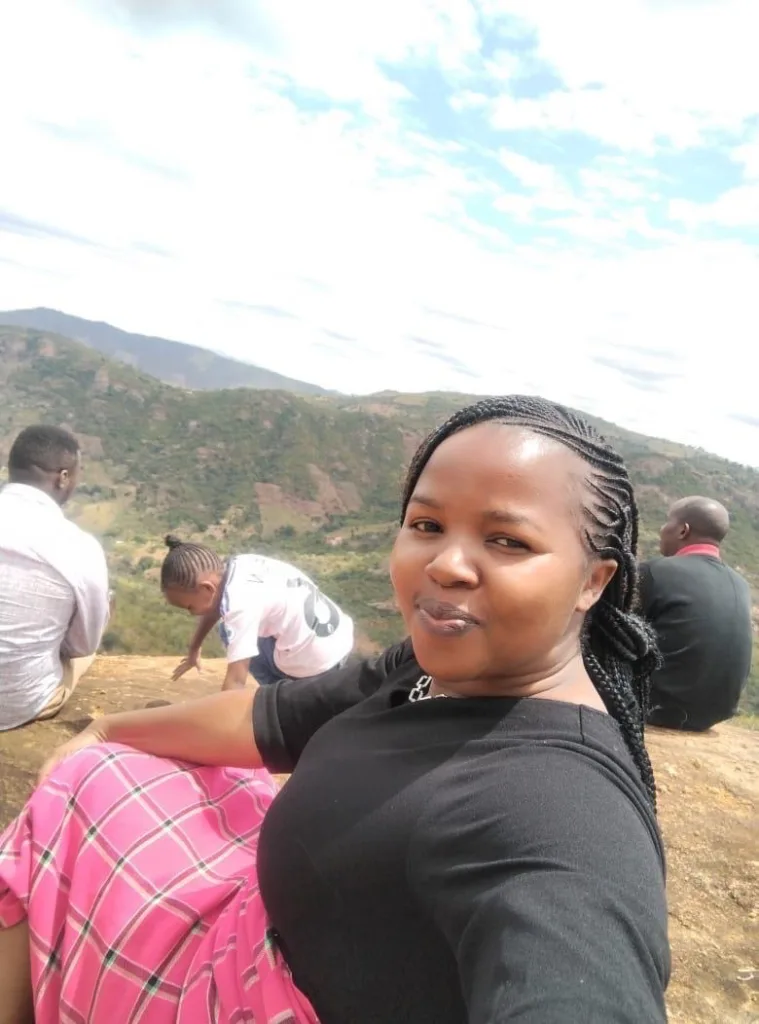
My photos of the rock at the end of this chapter, mean a lot to me. And it was for the first time ever since I was born, I have a photo with the rock and me. In the photo are also my daughter, my brother and my husband. The figures in the group process all arrived and gathered on my rock – Mother Jennie, Bubbly Jennie and Cultural Jennie. We are all here.
My daughter had a lot of questions. It was her first time to visit the rock. She had a really good experience. She wanted to detail about everything. She asked why there are so many trees surrounding the rock. She lives in the city and had never seen that before. I was telling her about my history on that rock. We were just sitting there. Then she was building stones on top of another of another and having a good time with it. She was speaking to the stones and throwing them. I told her about my childhood, how we used to go to that rock and we played there and deep down that hill we used to fetch water from this stream. And that is where we carried water on our head up the hill to our home. She asked,
“Mommy, did you really get tired?” and I told her, “Yes, I got tired – our childhood was not as smooth as nowadays. Even to this day there is no water in our home in the village, we still fetch it from the river. We don’t have taps in in the village”.
She asked, “Can you break your back when you carry water on your back”?
And I explained to her, “I was raised by a traditional mother and our mother taught us to carry water even at your age, six years old, I could carry the five litre jerrican from the river to home. That water is used for cooking and washing, and for other house chores and bathing as well. The only means of transport to fetch water from the river was through our back. So you need to carry it from your own your back. Even today”.
I explained to her all those things. She brought out the story. When she asked about it, I thought, this is a perfect moment for me to share with her about the history of this rock and my experiences with it.
And now, I am truly able to say, I am only here with joy. My trauma is gone. I’m so happy at this moment to feel I have found the knowledge to bring this rock and Jennie together. For me it means so much that I can talk about it. That has never happened in history. There is no photo anywhere in history of Jenny and the rock. It means for me, I have healed and I’m ready to make peace. It means we are together. And the only thing I can see when I was standing on that rock that day was not trauma. It wasn’t the regret. It was all beauty. I thought, I have something that’s very strong, that I can stand on. That gave me a lot of power that day. And I could see the beauty that comes with my past experiences, and I forgave myself that day, I forgave myself for everything, I forgave this rock. And I made peace.
I visited my dad and said to him that I would really love to experience my childhood life right now. Because it will be different. I know that I wouldn’t be regretting, I’ll not be projecting it to anybody. I know it will be so beautiful.