

FOREWORD
First and foremost, I would like to express my sincere gratitude to Max, Ellen and Lynn – my guiding team members- who have accompanied and assisted me throughout my journey of learning and personal development. Their dedication and guidance have been a tremendous source of encouragement, helping me persist in my inner exploration and growth. Without their support and inspiration, I would not have been able to make such profound progress in practicing Process Work and transforming myself as I have today.
ABSTRACT
This work explores the journey of applying Process Work in self-exploration and transforming perspectives on life, particularly the desire to move abroad in search of freedom and happiness. Through the practice of Inner Work and connecting with my Dreaming Process, I discovered that true freedom is not merely about changing one’s external environment, but about shifting internal awareness and mindset.
The essay begins with an introduction to a few of the key concepts in Process Work that I have been studying and practicing in my studies as a diploma student in the Deep Democracy Institute International Diploma Program (DDI), including Inner Work, Dreaming Process, Edge, X Energy, U Energy, Essence, and Unfolding. I chose to define and focus on these key concepts (of the many in process work) because they have been the most relevant in my practice over these last year, and in relation to my journey that I will describe in these next pages. These terms point out theoretical concepts as well as methods and practices to identify and work with different energy streams within ourselves, and at times to overcome psychological barriers (edges) and move toward greater self-integration.
Following this, the essay narrates my personal journey from nurturing the dream of moving abroad to encountering my personal “edges” – related to the realization that this desire was not just an external longing but also connected to unresolved inner conflicts. My experience in Amsterdam was a crucial turning point where I had a profound insight: happiness does not depend on geography but on one’s internal state.
Two specific examples of inner work with my dreaming process illustrate how I worked through these realizations:
Inner Work Practice: A practical exercise with 2 inner voices representing two opposing energy flows – one side being safety (U Energy), and the other being the desire for freedom (X Energy). In the process of facilitating this inner dialogue, I noticed a flirt which took me out of the cycling polarity and brought a new perspective to the perceived dilemma. This gave me a “lived experience” of the true meaning of freedom.
The Flirt: In a moment of contemplating the idea of moving abroad, an image suddenly appeared in my mind, seemingly out of nowhere: a vast canopy, spreading its shade, evoking the feeling of home.
I did not intentionally create this image, but it came to me — a message from an unknown, mysterious force. As I observed the tree, I felt a sense of peace and stability, as if I had found something familiar, even while I was still uncertain about the decision to stay or leave.
The conclusion summarizes my transformation in perspectives on work, love, and freedom. I realized that instead of seeking happiness externally, I needed to cultivate inner stability. True freedom is not about leaving or staying, but about the ability to live authentically, wherever I am. In the following pages, I describe in further detail my innerwork process as it unfolded in my “inner and outer lives” over these last years, and some of the process work concepts and methods that assisted me along my way. Thank you for reading!
INTRODUCTION TO PROCESS WORK AND PERSONAL JOURNEY
I was born and raised in an ordinary family in Ho Chi Minh City. When I was 5 years old, my parents divorced, and I lived with my mother. Later, my mother remarried and had two more children. From a young age, I was taught that I had to help with and bear
the family’s burdens. Outside of school hours, my life revolved around housework, taking care of my younger siblings, and enduring cruel and irrational beatings from my own mother whenever I failed to meet her expectations. Even as I grew into adulthood, she continued to instill in me that I was obligated to bring money home to support her.
My childhood was one of hardship, tears, and resentment, and things did not improve much when I started working. For countless years, I lived with self-doubt and an inferiority complex, believing that because I did not have a complete and loving family, I was not worthy of a happy one myself. I constantly avoided and feared romantic relationships or marriage, thinking that no one would accept or love someone like me, who lacked a strong educational or family background. I was afraid of being judged and evaluated, so I ran away to prevent anyone from having the chance to judge me. I was also perpetually broke, as my family would ask me for money every few days or weeks. They treated me like a literal ATM: whatever I earned from work, I had to give to them, and they had no interest in knowing how difficult my life was outside.
But looking back after many years, especially now as I am writing this thesis, I see that it was not entirely a bad thing. Instead, it made me proud of myself, for I had fought for and gained INDEPENDENCE, FREEDOM, and HAPPINESS. And it is this journey that leads me through this entire thesis—a much deeper journey of exploring my inner world through Inner Work and listening to my Dreaming Process.
This thesis is the authentic story of that journey. Together, we will delve into the core concepts of Process Work that have guided me, explore how I applied them to real-life experiences in my quest for change, and witness the profound transformations in how I perceive life, work, love, and the true meaning of freedom.
I. Key Process Work Terminology
I’d like to share my own understanding of “Inner Work”, “Dreaming Process” and other terminologies that I had opportunities to learn and work with Max and Ellen. It might be a bit different for everyone, because we are all different.
1. Inner Work
Inner Work is the practice of consciously working with one’s inner world. This involves observing and engaging with one’s emotions, thoughts, and inner images. It is a crucial practice in process work that allows individuals to explore and understand more hidden, possibly marginalized aspects of themselves more deeply. It is often inspired by an experience of discomfort, unease, or irritation, and counterintuitively, focuses on the information in the disturbance as the elixir for the “issue”.
2. Dreaming Process
The Dreaming Process refers to the underlying stream of experiences beneath ordinary reality—similar to a “dreaming current” flowing through our lives. In Process Work, each person has a continuous “dreaming” layer that manifests through subtle signals: spontaneous mental images, vague bodily sensations, nighttime dreams, or even unexpected coincidences. These phenomena are not random but contain messages from the unconscious, reflecting deeper themes and processes unfolding in one’s life.
3. Edge
An Edge is the psychological boundary between the realm of experience that feels familiar and the realm that is unknown or unaccepted.
4. Primary Process
The Primary Process is the stream of experiences, thoughts, and behaviors that one is most conscious of and strongly identifies with. It is the “main story” one tells about oneself—encompassing the roles, values, beliefs, and behaviors that feel natural and familiar. The Primary Process shapes one’s current identity and comfort zone.
5. U Energy
“U energy” (where “U” refers to “you”) represents the kind of energy that is familiar and close to an individual—it is the energy of the everyday self, and directly linked with the primary process. They can be used as synonyms. U energy consists of emotional states and behavioral patterns that feel comfortable and align with one’s current identity. It includes habits, values, and beliefs that are consciously recognized as part of oneself (belonging to the Primary Process). Simply put, U energy is one’s “comfort zone” in terms of energy and personality.
6. Secondary Process
The Secondary Process consists of experiences, tendencies, or personality traits that lie outside of one’s familiar awareness. These are aspects that one unconsciously pushes aside as “not me,” but in reality, they contain genuine needs and untapped potential for personal growth.
7. X Energy
In contrast to U energy, “X energy” (where “X” signifies an unknown factor) represents unfamiliar or unexplored energy within oneself. These are aspects, traits, or inner strengths that are not usually recognized as “me.” X energy often appears as a disruptive, challenging, or uncomfortable force to the familiar self, but in reality, it carries potential and important messages for self- development (belonging to the Secondary Process).
8. Awareness Levels
Consensus Reality, Dreaming, Essence – Consensus reality is the measurable aspect of our experience. Within a given group or culture, it is agreed upon as “real”, and encompasses shared values, beliefs and viewpoints. Dreaming is our subjective experiences that are non-measurable, and relative,
based on an individual’s subjective experiences, senses, and feelings. At the Essence Level is an unmeasurable, ungraspable experience of oneness beyond polarity, timeless and spaceless. We can move between awareness levels depending on the focus of our attention.
9. Unfolding
Opening up and exploring an experience in a natural way, rather than imposing meaning onto it. The practice of unfolding is a precise, signal based approach that can be mastered like an art. It is applied to discover the hidden information in a disturbance or unknown experience, usually related to an x-energy. Practitioners take years to develop this skill like an art. It is fundamental to the practice of process work.
II. Applying Inner Work and Dreaming Process in Life
1. Beginning with the aspiration to go abroad
In 2019, I had the chance to attend my first DDI training program in Bangkok, Thailand. That experience in Bangkok was an important starting point that broadened my perspective. Meeting people from many continents (Europe, Africa, etc.) and immersing myself in a multicultural environment, I became aware of how diverse the wider world is. The group discussions and activities at DDI made me realize that despite cultural differences, people everywhere share very universal feelings and concerns.
This discovery further fueled my curiosity about life abroad. At that time, I was full of excitement and started asking countless practical questions: Where should I go? How would I prepare financially and professionally to make it abroad? During this period, my aspiration to go overseas was the clearest primary process in me – it was the story I told myself: “As long as I go abroad, I will find true freedom and happiness.”
2. Confronting the “Edge” – a turning point in Amsterdam
By 2022, after a few years of preparation, I stood at the “Edge” of a crucial decision. I had received a job opportunity in Dubai – it seemed that my dream of going abroad was on the verge of becoming reality. Yet deep down, I felt a strange unease and hesitation. In the end, I turned down that Dubai opportunity, sensing that it didn’t truly align with my personal aspirations and values.
Not long after, I attended another DDI program in Amsterdam, the Netherlands.
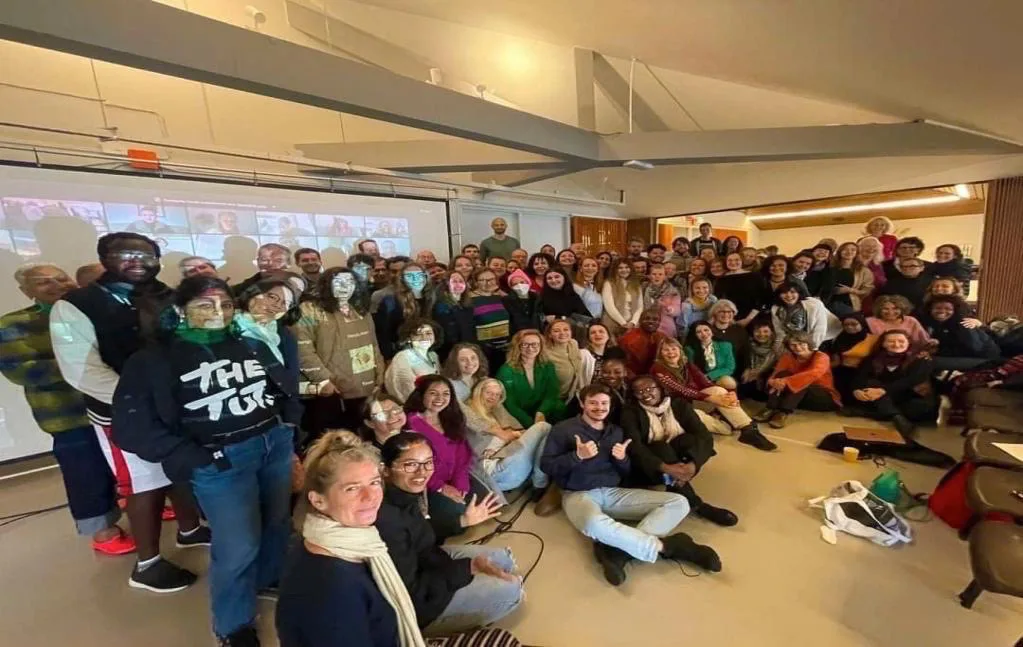
I once believed that freedom meant leaving my homeland, that only by studying and working abroad could I truly find happiness and develop myself – even though I had already sensed “something different” after turning down a job opportunity in Dubai earlier.
However, when I attended the Deep Democracy Institute (DDI) program in Amsterdam, I unexpectedly confronted a completely different truth—one that shook the foundation of my long-held beliefs.
While participating in daily group on a wide range of deeply relevant and pressing topics: The Russia-Ukraine war, White privilege, Black identity and colonization, I experienced profound emotions, leaving me reflective and deeply moved. There were multiple moments when I touched the Edge of my own awareness, and it was in those moments that I practiced Inner Work at its deepest level.
A powerful emotion overwhelmed me, and I couldn’t hold it back. In that moment, I was overcome by a profound realization: no matter what country we are in, people face similar challenges and longings. What I thought were issues “unique to Vietnam” turned out to be present everywhere in the world. This realization hit me like a wave, shaking the long-held assumption that “life will be better if I go far away.” It was a peak, transformational experience in my life.
In that emotional moment in Amsterdam, the foundation of my belief system and a large part of my identity was shaken to the core. I realized that I could not move away from problems. Every place has its own problems. My strong emotional reaction, which was also unusual for me, expressed the huge power of this moment for me. This message was so contrary to my usual belief – I had an epiphany: simply changing countries would not resolve the deeper things I was seeking, like freedom, happiness or authenticity, if I still carried internal burdens that were troubling me. Those issues would be with me no matter the location of my physical body. This led me on a life changing path of inner work, that also reshaped my outer life in Vietnam. I did find myself “moving abroad” however not physically, but psychologically and spiritually, through the process of inner work.
3. Engaging more with the Secondary Process-everything gradually Unfolds
At the Amsterdam Intensive, after several days of Group Process, I began to hear another voice inside me—one that had been silent for years.
For the first time, a daring thought surfaced:
“It’s time to focus on my own happiness.”
The thought made me feel both excited and anxious—excited by the possibility of freedom, yet anxious about what it would mean to step away from the only role I had ever known.
The Edge became clearer:
I pictured myself standing between two opposing storms — one representing my long- held beliefs about duty, the other symbolizing the freedom I deeply craved.
Secondary process – “I can live for myself”
I closed my eyes, tuned into my body, and asked myself:
“If I no longer had to carry this responsibility, how would I feel?”
An unexpected image emerged:
I saw a lighter, freer version of myself, sitting peacefully in a space of my own. There was no guilt, no pressure—just a deep sense of calm and relief.
My Secondary Process told me:
I can live without self-blame.
I have the right to choose my own life path.
Wanting a peaceful, self-directed life is not selfish—it is a fundamental and legitimate need.
I can put my own happiness at the center of my life.
For years, I had believed I had no choice, that my worth was measured by how much I sacrificed for my family. But now, I saw another truth:
“I had already fulfilled my duty far beyond what was expected of any child. If my mother was still dissatisfied, that was her choice—not my burden to bear”.
I had been deprived of a loving childhood, but that did not mean I had to continue living in that cycle of suffering.
I realized I could be proud of myself.
Despite everything, I had remained kind, responsible, and generous.
4. Expanding Inner Work – The Decision to Leave Home and Live Alone
After returning from Amsterdam in October, and following a series of events that happened around that time, I decided to move out and live on my own three months later. This was not an easy decision for me. Although I had often felt exhausted living with my family, I hesitated to take a step that seemed so big and irreversible. I knew that if I stayed, I would continue to live in a state of tension, disconnection, and a constant sense of not being true to myself. However, if I left, I would have to face an underlying guilt: that my family might face more financial hardship without my regular contributions.
I entered a deep Inner Work process to confront this inner conflict. One part of me was strongly attached to the familiar cultural narrative: “I have to stay and help—otherwise, I’m not a filial child.” This voice had been with me for many years, deeply rooted in traditional Eastern values around family duty.
Yet another part of me was growing louder: “I need my own space to live the life I want. I can no longer sacrifice my inner peace just to maintain a sense of false harmony.”
I realized I was standing at a clear Edge—between holding on to an old identity and stepping into a freer, more authentic life. Crossing that edge meant acknowledging that if I continued to stay, I would only become more and more disconnected from myself.
Eventually, I chose to leave. In order to protect the new boundaries that I was trying to build, I did not contact my mother for two years. I knew she had a strong tendency to pull me back into the old family pattern – where I would once again become the one who bears the burden, remains silent, and lives in exhaustion.
Over the Edge!
I’ve learned to set healthy boundaries and found a way to support my family that feels balanced and sustainable. Over time, I moved out and began living on my own — and I’ve stayed that way ever since. It’s been a slow, unfolding process of growth and learning.
In the beginning, I had to make a clean break. As I mentioned, I stopped talking to my mother for a brief period because I was still too easily drawn back into the old family patterns, where I took on more than I could carry.
As time passed, I began to feel more grounded in my sense of independence. I could reconnect with my family — but now from a place of clarity and steadiness. I’ve learned where my boundaries are and how to honor them.
One example is my mom’s birthday. My two younger siblings and I planned a small celebration. They brought a birthday cake and gifts, and I added a smaller cake and some roast chicken. It was a sweet, simple evening — full of warmth and laughter. What made it special for me was that I truly enjoyed it. I didn’t feel heavy or responsible for everything. I still care, I still show up — but now through open connection and shared effort, not through silent sacrifice.
After all these years, I finally felt a sense of ease and lightness.
I no longer believe that living for myself is something to feel guilty about.
I’ve come to understand that real love doesn’t ask us to abandon ourselves.
And wanting to live freely isn’t about running from responsibility — it’s about showing up for life with honesty, intention, and healthy limits.
III. Finding my true home
In the subsequent DDI programs I joined in Kenya and Spain (2023-2024), I found even more opportunities for deep reflection about moving abroad. I still found myself flirting with the possibility, in part due to my adventurous spirit. And who knows, maybe one day I will live in another country! So far, however, the richness of my inner work around changing inner perceptions about life, and waking up to the ways that I have been formed and therefore limited by assumed cultural values, has been liberating and a lot of fun! Each of experience in those new lands illuminated an inner aspect of me.
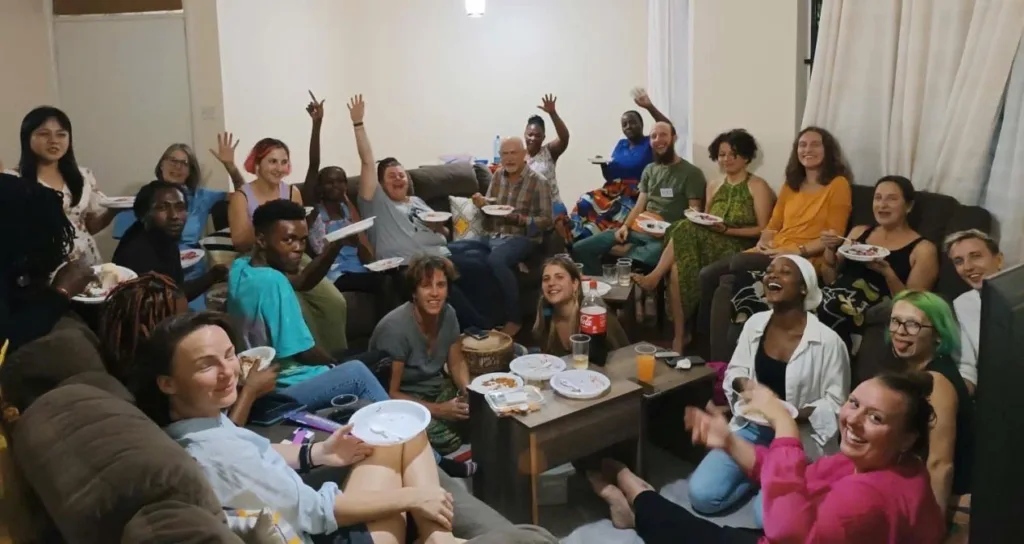
For instance, while working in groups and spending time with international friends in Kenya, I caught glimpses of social issues in our group conflicts that highlighted special aspects about my life in Vietnam, and affected my life path in two significant ways.
I met residents of Kenya, and learned in group processes that for many, making ends meet and providing for daily necessities such as food and shelter can be very challenging. This made me appreciate certain aspects about Vietnam that I had preciously not seen, and somehow taken for granted. Although many people in Vietnam struggle with finances, it is rare that any individual is left without food or some kind of shelter. Of course there are some exceptions, but it seems the community supports individuals in their basic well-being and physical needs in desperate situations. I am now very grateful for that aspect of my culture, and have come to appreciate it more fully as a side effect of my exposure to an international community, and specifically my experiences in Kenya.
I met many Kenyans whose everyday lives in terms of resources, transport, and work challenges seemed to be very hard. On this level, my life seemed easier. However, so many of them also appeared to be somehow happy, with a positive attitude and lots of good spirits and enthusiasm about life. This re-instilled in me the idea that my issues in terms of happiness and comfort are more related to my inner experience than my outer circumstances. It inspired me in my inner-work, which i feel has gone deeper and further since then. My experience in Kenya played a big role in supporting this direction in me.
This once again reinforced the insight that true freedom isn’t about escaping one’s environment, but rather redefining one’s relationship to it – in other words, how I perceive, adapt, and transform myself in response to my circumstances.
While in Spain, during a short visit to a museum, a moment of “Dreaming” came to me unexpectedly. I realized that if I wanted to “travel to find freedom,” I first had to learn how to liberate myself from my inner constraints.

Parallel to those realizations, in my personal life I also began the practical preparations for moving abroad: saving money, improving professional skills and language ability, and trying to get everything ready for a new life. Interestingly, the more I prepared, the more I realized that my aspiration was not really about a change of geography, but about an inner transformation. I yearned to break free from the social norms and expectations that had constrained my true self for so long. With this realization, I started focusing more on daily Inner Work practice as a way of “journeying inward”, instead of fixating solely on outward plans.
1. Inner Work Practice – Inner dialogue with two part of me
To illustrate how I worked on myself internally, I’d like to share an example of an Inner Work practice that helped me connect more deeply with my true home, which is “non- local” inner self. After my trip to Spain, one evening I sat in meditation and decided to confront the question head-on:
“Do I really need to go abroad to be happy?”
I closed my eyes and focused on the sensations in my body as I imagined staying in Vietnam versus moving abroad. When envisioning myself remaining in my home country, I felt a vague heaviness in my chest, as if an invisible weight was pressing down on me. On the other hand, when I pictured myself in a foreign land, I felt excitement, yet at the same time, a subtle and undefined fear emerged.
I realized that two distinct parts existed within me:
Primary Process: This represents the familiar, the part closely tied to who I am in the present. It brings stability and safety but can also carry a sense of heaviness.
Secondary Process: This is the part I have not yet fully embraced – the aspect that seeks change, exploration, and new experiences. It calls me forward, yet at the same time, it triggers anxiety and hesitation.
And then, these two parts started a conversation:
Me (Primary Process – the familiar self, seeking safety)
“I have built a stable life. I know this place, the people here, and I feel secure staying. Leaving would mean facing uncertainties, and that is frightening.”
Me (Secondary Process – the part longing for change and freedom)
“But if I never try, I will forever wonder: ‘What would happen if I left?’ If I don’t step outside my comfort zone, I will never truly discover what I want.”
This dialogue made the inner conflict within me clearer. I recognized that Edge—the boundary between these two processes—was becoming evident. It was the space where I felt trapped between the familiar and the unknown.
I took a moment to observe my feelings at “Edge”
I placed my hand on my chest—where the heaviness arose when I thought about staying—and I spoke to my Primary Process:
“I value stability and security. I don’t need to rush into leaving, and I have the right to protect myself from drastic changes.”
Then, I shifted my attention to the Secondary Process, the part urging me to move forward, and I said:
“I don’t have to leave immediately, but I also cannot ignore my dream. I will find ways to gradually engage with the larger world without harming myself.”
I noticed the conversation between these two sides was cycling. At this point, I shifted levels of awareness.
2. Dreaming Process Practice – The Message from the Canopy and the Redefinition of “Home”
In a moment of contemplating the idea of moving abroad, I was not actively seeking any signs, yet an image suddenly emerged in my mind: a vast canopy, its branches spreading wide, casting a cooling shade, evoking the feeling of home. (This emerged from the essence level)
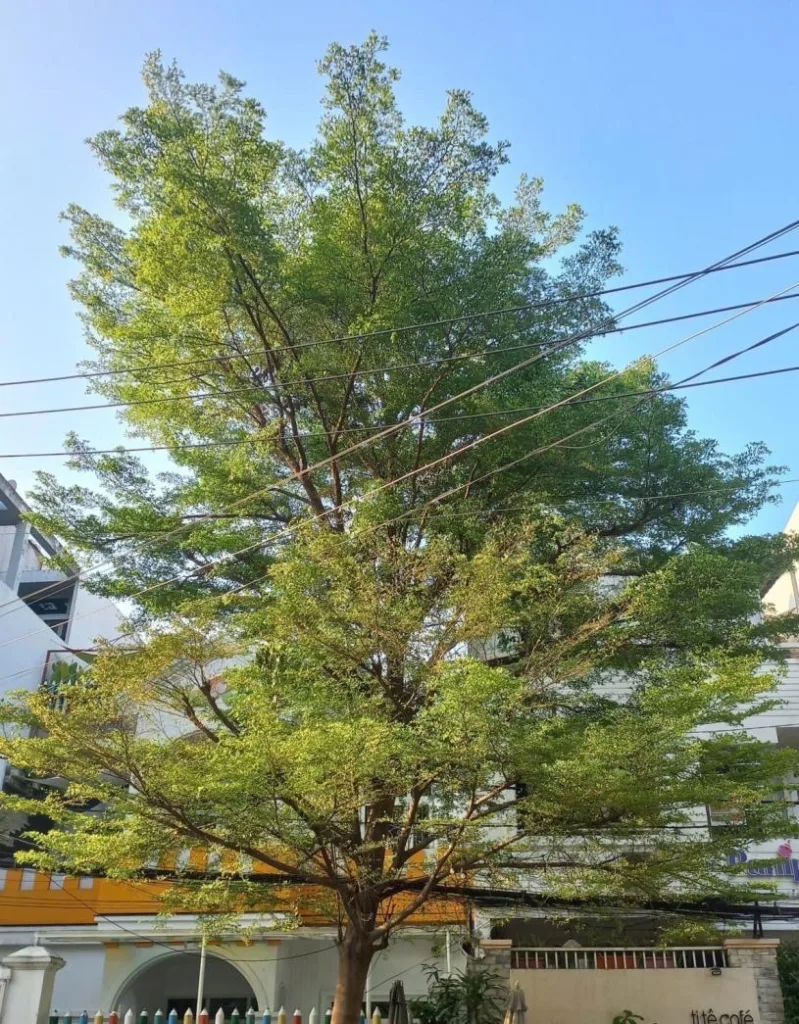
I felt an unexpected sense of peace as I saw this image. Then, a message naturally arose within me:
“Home is in the mind, and wherever I define and feel it as home, that is where I will find happiness.”
I realized that this was not just a fleeting thought but a part of the Dreaming Process — a message from a deeper level of consciousness, reflecting something about my relationship with the concept of “home” and freedom.
Working with the Dreaming Process: Expanding the Experience
Observing the Feeling of the Image
I did not try to analyze or rationalize it immediately but allowed myself to immerse in the experience. I sensed the stability of the canopy, as if it remained steady despite the restless movements of the outside world.
Expanding the Imagination – Flowing with the Movements of the Canopy
A gentle breeze passed through the leaves, creating a soft, whispering sound. I felt safe and at peace—as if I didn’t need to go anywhere, didn’t need to search for anything more, but simply needed to be here and experience the present moment.
Observing the Transformation of Feelings
As I followed the gentle sway of the canopy, I felt a deep sense of steadiness within myself, even in the face of change—whether it was external change or the shifting desires and decisions within me.
Home is not a specific place, but a feeling I can carry with me wherever I go.
Connecting This Image with Primary & Secondary Process
Primary Process (What I have been familiar with): I used to believe that home was a fixed place—a location where I was born and raised.
Secondary Process (What is unknown, mysterious): Now, I realize that home is a space that I experience as an internal feeling, it does not depend on a physical location.
Observing the Edge (The Boundary Between Two Processes)
I used to fear that whether I stayed or left, I would not feel truly happy or at peace if I lost my “home.”
But the canopy showed me that I can carry “home” with me wherever I go, as long as I define it in my own way.
Over the edge!
From this view, I could see myself standing at the boundary of two worlds—not trapped, yet not forced to make an immediate decision. I could move forward at my own pace, neither too fast nor remaining stagnant. I didn’t have to choose between these two aspects in an extreme way. Going further, I sensed the space of this canopy, and was affected by the atmosphere. I felt an inexplicable sense of home, timeless peace, and serenity that I have always known.After working with this image, I realized that freedom is not about leaving or losing something, but about expanding my perception of “home” and “stability.”
After working with this image, I realized that freedom is not about leaving or losing something, but about expanding my perception of “home” and “stability.”
I no longer feel pressured to choose a fixed place to call home. Instead, I understand that home can be an inner feeling, not just a physical location.
The Dreaming Process allowed me to access a deeper realization that my rational mind could not create on its own—an internal shift that unfolded naturally, without force.
IV. Stepping into Reality: Bringing messages from the Essence Level into Life
The two examples that I described in depth – the process of moving out of my parents house, and the process around moving, are two key examples part of the many moments of Inner Work that I have experienced. Through continuously working with my inner world, I have gained precious lessons that profoundly changed my mindset about going abroad, about work, love, and freedom.
1. Transforming Perspectives: Redefining Life, Work, Love, and Freedom
❖ On living abroad: I came to understand that whether I live abroad or in my homeland is ultimately just an external circumstance. That circumstance by itself does not guarantee happiness or freedom. What matters far more is my psychological state and how I connect with myself. If I carry unresolved issues in my heart, they will be present no matter where I go. On the other hand, if I find clarity and peace within, I can make anywhere I live feel like “home” and enjoy life fully. This realization has helped me stop idealizing the act of moving abroad; instead, I focus on addressing my own issues here and now.
❖ On love: I used to think that the love of my life might be waiting somewhere far away – that someone special would appear once I changed environments. As a side effect of my inner work about home, I redefined love not based on circumstances or looking for a specific kind of person, but on the quality of connection. To me now, love is about genuine companionship and mutual support through life’s ups and downs, no matter where the two people are. It’s not defined by social roles or material metrics, but by how deeply two people understand and accept each other’s true selves. This lesson has helped me appreciate my current relationships, including my family relationships, and become more open to the love around me, instead of fancifully dreaming of “a magical someone in a foreign land.”
❖ On work and career: Society often ties career success to having an “international” job or a high-status position admired by others. I too was influenced by that notion, viewing developing a career abroad as proof of my self-worth. However, thanks to Inner Work, I stepped back and asked what I truly want from my work. My answer now is: work is a means for me to sustain the life experiences I desire, rather than a race to gain status or external recognition. This means I prioritize choosing work (whether in Vietnam or anywhere) that aligns with my values and passions, allowing me to contribute while also enjoying life. I have learned to balance striving in my career with taking care of myself and my relationships – because a brilliant career would be meaningless if I lost my health or neglected my loved ones.
❖ On freedom: My concept of freedom has shifted from being about external freedom to internal freedom. I used to think freedom meant being able to do what I want in a place I like (for example, a more open, progressive country). Now, I believe true freedom originates from living authentically. When I dare to express my real self and pursue the values and lifestyle that suit me (even if that goes against social expectations), that is when I feel free. This inner freedom does not depend on geographic location. It is the sense of being in control of my life and being fully “myself”, and because of that, I find I can be happy even in the simplest of circumstances.
Looking back on the entire journey, I realize the greatest change has been at the essence level within me. The methods of Process Work helped me peel away layers of outer desires to reach the true core: the need to live a meaningful life, to be free to be myself, and to connect genuinely with life. Once I understood this essence, I became much more grounded and serene, no matter what I eventually decide about living abroad.
2. Inner Freedom: The Journey Beyond One’s Own Boundaries
Freedom is not just an external state; it is also an inner journey—a process in which I continuously step beyond my own Edges (psychological boundaries). These boundaries are not always obvious; they can be hidden in old beliefs, unnamed fears, or unconscious expectations that I once imposed on myself.
Recognizing My Inner Boundaries
I used to believe:
“I can only find new experiences and become happy if I have the opportunity to live in another country.”
“Success means reaching a certain standard set by society.”
“I can only love if I meet the right person at the right time.”
“I can only be free if I detach myself from my current constraints.”
However, as I truly worked through these beliefs, I realized that they were not absolute truths—they were simply my Primary Process, shaped by the values of my culture and upbringing. Meanwhile, a deeper part of me which I discovered through following secondary, unintentional signals, was showing me that another path existed.
Crossing the Edge: Facing My Inner Conflicts
The Edge—the boundary between the familiar and the unknown— emerged every time I approached a significant change. Initially, the feeling was unsettling, like a tug-of-war between desire and fear. But instead of rushing to escape or forcing myself to move past it too quickly, I learned to stay with that discomfort, allowing it to gradually reveal the hidden messages within.
A pivotal moment in this journey was when I encountered the image of “home” in my mind—the canopy of a tree spreading its shade, offering a sense of safety and stability. I used to think that freedom meant going far away, but the Dreaming Process showed me that home is not a fixed location—it is an inner state of being. When I stepped beyond my own Edge—shifting from believing that I had to change my external circumstances to be happy, to realizing that happiness lies in my own perception—I felt a profound sense of relief.
True Freedom: Releasing the Fixed Narrative
I used to set many conditions for my freedom and happiness:
“If I get a better job, I will feel secure.”
“If I leave this place, I will find a better version of myself.”
“If I meet the right person, I will have a fulfilling life.”
But through Inner Work, I realized that each of these conditions was just a loop of control. I didn’t need to wait for perfect conditions to allow myself to live fully. When I stepped beyond the Edge and followed my Secondary Process, I experienced a sense of true inner freedom—a state in which I could embrace any situation with openness, rather than being trapped in rigid expectations I had created for myself.
Looking Back on the Journey of Overcoming Myself
Inner freedom does not come from escaping reality, but from fully embracing it and allowing myself to explore new possibilities that I had never considered before.
I no longer feel bound by a rigid idea of “home,” because I understand that home is where I feel connected and at peace, regardless of location.
I place fewer conditions on my happiness and freedom, because I know that true freedom is the ability to live authentically—wherever I am, whatever I do, and whoever I am with.
Inner freedom is not a destination but a continuous process of crossing my own Edges— each time I step beyond, I come closer to my truest self.
CONCLUSION
The journey of practicing Inner Work and listening to the Dreaming Process has deeply transformed how I perceive life abroad—and life itself. I used to believe that freedom was something outside of me, to be found in a different country or ideal life. But over time, I came to realize that true freedom begins with the ability to liberate myself from internal constraints: limiting beliefs, inherited roles, and unexamined cultural norms.
Through Process Work, I’ve learned to meet my inner conflicts with compassion instead of avoidance, to recognize the signals that arise at the Edge, and to dialogue with all parts of myself. By doing so, I moved from confusion and idealization to clarity and grounded choice. I no longer feel torn between the energies of stability and freedom; instead, I can hold both and act with more awareness about each.
Now, whenever I face major life decisions, I no longer rush outward—I turn inward. I practice “deep democracy” within, and I trust that my answers are already alive inside me.
And now, I have an everyday practice that focuses on my own personal well-being! Every day, I try to take good care of my body eating good fruits and cooking healthy food for myself. At work, or in my daily life, if I find myself getting stressed, I stop, take a break, and eventually re-connect with my own inner space. Some days it goes better than others, but my orientation towards my own happiness is now center in my life. Although these might sound like simple things, they are the result of this very deep process and long journey for me, with many ups and downs, and I very happy and proud about it ☺
Whether I stay or go, the sense of home and freedom I sought has already begun to grow within. And wherever life takes me, Process Work will continue to be a trusted companion—reminding me that the true journey is always an inner one.
Whether I stay or go, the sense of home and freedom I sought has already begun to grow within. And wherever life takes me, Process Work will continue to be a trusted companion—reminding me that the true journey is always an inner one.